Weed Mat for Agriculture: Uses, ROI & Buying Guide (2026)
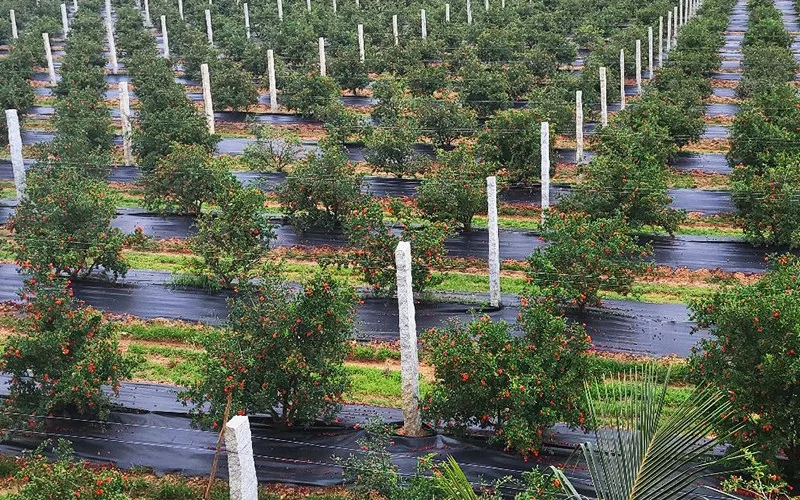
Weed mats, also known as ground cover fabrics, are UV-stabilised woven polypropylene sheets designed to suppress weed growth without chemical herbicides. Unlike plastic mulch films, weed mats are permeable, allowing water and air to reach the soil while blocking sunlight to prevent weed germination. They are widely used for long-term weed control in orchards, nurseries, open fields, and greenhouse pathways.

Agricultural weed mat laid across a field to suppress weed growth and improve soil hygiene
What Are Weed Mats & How Do They Work?
Like Plastic Mulching, Weed mats control unwanted plant growth through a simple but highly effective principle: light exclusion. When a weed mat covers the soil surface, it blocks sunlight from reaching weed seeds, preventing germination and photosynthesis at the source.
Unlike standard plastic mulching sheets, high-quality agricultural weed mats are permeable. This permeability allows water, nutrients, and air to pass through the fabric while maintaining complete light blockage—creating an ideal soil environment for crops without encouraging weed growth.
Also, Unlike plastic mulch films, which are impermeable and used mainly for short-duration crops, weed mats are permeable and designed for long-term weed control in orchards, nurseries, and pathways.
Key Agricultural Applications of Weed Mats & Ground Covers
Weed mats and ground covers are widely used across horticulture and protected cultivation to control weeds, improve farm hygiene, and reduce long-term labour costs. Their key agricultural applications include:
1. Orchards and Long-Duration Crops
Weed mats are ideal for long-duration crops such as pomegranate, papaya, and citrus, where repeated manual weeding is labour-intensive and risky for surface roots. By blocking sunlight to the soil while allowing water and air permeability, weed mats suppress weed growth, reduce competition for nutrients, and keep the orchard floor clean for easy harvesting.
Across Maharashtra, farmers using Agriplast weed mats have significantly reduced weeding labour and chemical weedicide usage, improving orchard hygiene and operating efficiency.
For a detailed look at how weed mat management works, read our pomegranate farming guide.

Pomegranate Yield With Agriplast Silver Laminated Weed Mat
2. Nurseries and Greenhouses
In nurseries and greenhouses, hygiene directly impacts plant health. Weed mats and ground covers are installed across floors and pathways to:
- Prevent seedling trays and pots from sitting in mud, reducing soil-borne fungal diseases
- Keep walkways clean, dry, and safe for workers
- Eliminate weed growth that can harbour pests such as whiteflies and thrips
They are also extensively used in soilless cultivation and hydroponic systems to maintain sterile, well-managed growing environments.

Nursery floor covered with Agriplast weed mat to prevent soil-borne diseases and maintain clean walkways
🎥 Watch: Farmer Jitendra Patel Shares How Weed Mats Improved His Nursery
Hear directly from Farmer Jitendra Patel from Khargone, Madhya Pradesh, as he shares his 4–5 years of experience using Agriplast Weed Mats in his nursery — how they prevent weed growth, stop roots from contacting soil, drain excess water, and maintain plant hygiene.
3. Between Crop Beds (Open Fields)
Weed mats are commonly laid between crop beds in open-field farming to maintain field hygiene, reduce manual weeding, and lower dependence on chemical weedicides. This is especially useful in vegetable cultivation and drip-irrigated fields where clean inter-row spaces improve farm operations.

Weed mat used between crop beds in open field farming
4. Greenhouse Perimeter Hygiene (Buffer Zones)
Installing weed mats around greenhouse perimeters creates a sanitation buffer zone that prevents weeds, pests, and soil-borne pathogens from entering protected structures. These mud-free buffer areas reduce pest pressure from weed-hosted insects like thrips and whiteflies and ensure clean surroundings even during heavy rainfall.
The correct application of weed mats is effective only when the right type is selected based on crop, climate, and field conditions.

Agriplast White Weed Mat Being used In Greenhouses To Maintain Hygiene Parameters
How To Choose The Right Weed Mat / Ground Cover
1. Understand the Plant Requirement
Different crops respond differently to moisture retention and airflow in the root zone.
For example, pomegranate is sensitive to excess moisture around the roots, so non-permeable (laminated) weed mats are often preferred to prevent water accumulation directly at the root zone and reduce disease risk.
Pomegranate farmers across Maharashtra are able to improve their yield and get better quality using Agriplast Laminated Weed-Mat designed for pomegranates.
2. Choose the Right Thickness (GSM)
Thickness determines durability and lifespan.
Higher GSM is recommended for long-duration crops, orchards, and high-traffic areas, while lower GSM works for nurseries and short-term use. Agriplast weed mats or ground covers are available from 90 GSM to 130 GSM.
3. Choose the Right Colour
Colour affects light blockage, heat reflection, and root-zone temperature.
Black surfaces maximise weed control, while white or reflective surfaces help manage heat in greenhouses and orchards.
Commonly available colours of weed mat are black–black, black–white, and white–white.
4. Choose a Reliable Supplier
Quality varies significantly across weed mats. Always choose a supplier that offers UV-stabilised products, consistent GSM, and proven field performance to ensure long-term results.

Comparison of weed mat GSM thickness for agriculture
Weed Mats vs Mulching Sheets: Which Is Better?
Farmers often confuse woven weed mats with plastic mulching sheets because both suppress weed growth. However, they serve very different purposes based on crop duration, field usage, and management practices.
Key Differences at a Glance
| Feature | Weed Mat | Plastic Mulch Film |
|---|---|---|
| Water Permeability | Permeable: Allows rain and irrigation water to pass through. Agriplast Weed Mats have a water permeability of 21 litres/sqm/min | Impermeable: Water must be applied via drip irrigation laid underneath |
| Crop Duration | Long-duration crops (multi-year use) | Short-duration cash crops (single season). Thicker mulch films (50–100 microns) can be used for more than one season |
| Durability | Higher: 3–5 years; walkable and tear-resistant | Lower: 6–24 months depending on thickness; not walkable |
| Cost Structure | Higher upfront cost, lower long-term replacement cost | Lower initial cost, higher recurring replacement cost |
| Primary Applications | Orchards, nurseries, greenhouse floors, pathways | Raised beds in open-field and protected cultivation |
| Typical Crops | Pomegranate, citrus, papaya, nursery plants, orchard crops | Tomato, chilli, watermelon, cucumber, short-duration cash crops |
Which One Should You Use?
- Use mulching sheets for short-duration, high-value cash crops, where moisture retention and early crop growth are critical.
- Use weed mats for long-duration crops and permanent farm areas, where durability, hygiene, and long-term weed control are required.

Difference between weed mat and plastic mulching sheet in agriculture
How to Install Weed Mats Correctly
Correct installation is critical to weed mat performance and lifespan.
Incorrect installation is one of the most common reasons weed mats fail prematurely. While installation details may vary based on application (orchards, nurseries, greenhouses, or pathways), the following field-tested steps apply across most use cases.
1. Prepare the Ground
Clear the area of sharp stones, existing weeds, roots, and debris. A smooth, level surface prevents punctures and ensures the weed mat sits flat against the soil.
2. Lay the Weed Mat with Proper Overlap
Unroll the weed mat evenly over the prepared area. When using multiple sheets, maintain an overlap of 4–6 inches at joints.
3. Anchor Securely (Critical Step)
Fix the weed mat firmly using weed mat nails, U-pins, or plastic pegs at regular intervals—typically every 1 to 2 metres.
4. Adjust Installation Based on Application
- Orchards: Leave a small gap around the tree trunk to prevent collar rot
- Greenhouses & Nurseries: Tight anchoring along walkways and edges
- Pathways & Open Fields: Higher anchoring density in windy or high-traffic areas


Weed mat installation with proper overlap to prevent weed growth
Cost Analysis and ROI of Weed Mats
At first glance, weed mats may appear expensive compared to manual weeding or chemical weed control. However, when evaluated over their usable life of 3–5 years, weed mats often deliver a strong return on investment (ROI) through recurring labour and chemical savings.
Assumptions for This Example
- Area considered: 1 acre (≈ 4,000 sqm)
- Weed mat cost: ₹28 per sqm
- Usable life: 4 years (conservative estimate)
- Application: Orchard / long-duration crop
Initial Investment
| Item | Cost |
|---|---|
| Weed mat (₹28 × 4,000 sqm) | ₹1,12,000 |
| Installation & fixing (approx.) | ₹8,000 |
| Total upfront investment | ₹1,20,000 |
Annual Cost Savings
| Expense Head | Without Weed Mats | With Weed Mats | Annual Savings |
|---|---|---|---|
| Manual weeding (3–4 cycles/year) | ₹45,000 | ₹10,000 (spot weeding only) | ₹35,000 |
| Weedicides & spraying | ₹10,000 | ₹2,000 | ₹8,000 |
| Disease & hygiene-related costs | ₹8,000 | ₹3,000 | ₹5,000 |
| Total Annual Savings | — | — | ₹48,000 |
ROI Over Time
| Year | Cumulative Savings | Net Position |
|---|---|---|
| End of Year 1 | ₹48,000 | –₹72,000 |
| End of Year 2 | ₹96,000 | –₹24,000 |
| Mid-Year 3 | ₹1,20,000 | Break-even |
| End of Year 4 | ₹1,92,000 | ₹72,000 net gain |
Need help choosing the right weed mat for your crop?
Our team can help you select the correct GSM, colour, and application-specific weed mat based on your crop, climate, and field conditions.
Get in touch with Agriplast for expert guidance.
FAQs
To install a weed mat properly:
- Clear the ground of stones, weeds, and debris
- Lay the mat flat with a 4–6 inch overlap between sheets
- Fix it using weed mat nails or U-pins at regular intervals
- In orchards, leave a small gap around the tree trunk to avoid collar rot
Correct installation is critical for performance and lifespan.
Blog written and Posted by
Abhinav Roy
Abhinav Roy is an agribusiness professional, agricultural communicator, and host of AgriTalk by Abhinav Roy. He works closely with farmers, agripreneurs, across India to simplify complex agricultural technologies into practical, field-ready insights. With hands-on exposure to protected cultivation, crop protection systems, and farm economics, Abhinav focuses on bridging the gap between science, sustainability, and scalable farming solutions.You can write your view/comments here
Need Expert Assistance?
Get personalized recommendations for your greenhouse, polyhouse, or irrigation needs.
-
Bengaluru (Corporate Office)
- 918141446666
- support@agriplast.co.in
WeWork Roshni Tech Hub - 1st floor, PFS Club House, Marathahalli Main Rd, R.J.Gardens, Lakshminarayana Pura, EPIP Zone, Chinnapanna Halli, Bengaluru, Karnataka 560037