Blueberry Farming in India: Varieties, Cost & Profit Per Acre (2026)

Over the last three years, India has seen a clear surge in interest around blueberry farming. Progressive farmers, agri-entrepreneurs, and even corporates are exploring it as the next high-value crop.
But why this sudden hype?
1) A Big Demand–Supply Gap
India imports more than 20,000 metric tons of blueberries every year, while domestic production is still very limited — estimated at roughly 1,000–2,000 metric tons, grown on a small acreage base.
Now compare that to Peru, which has over 16,000 hectares under blueberry cultivation.
The gap is obvious. Demand in India is growing rapidly, but local supply is nowhere close to meeting it.
2) Blueberry — 'The Superfood'
Globally, blueberry production crossed 2 million tons in 2024, making it one of the fastest-growing fruit categories worldwide.
India's berry market was valued at around ₹5,000 crores in 2023 and is projected to grow steadily in the coming years.
Urban consumers are actively shifting toward healthier food options. Blueberries are positioned as a "superfood," and with rising disposable incomes, more people are willing to pay for premium, nutrition-focused produce.
Add to that the rise of quick-commerce and online grocery platforms like Amazon, Zepto, and BigBasket — blueberries are now accessible beyond just high-end retail stores.
3) Premium Pricing Advantage
Unlike many traditional fruits, blueberries command a premium price in the market. Their imported image, health positioning, and limited domestic availability allow them to sell at significantly higher rates.
Naturally, that attracts attention from farmers looking for higher returns per acre.
But Here's the Reality
Blueberry is not an easy crop.
There's a reason India hasn't scaled production yet. It is a highly technical crop that demands:
- Specific Growing Conditions
- Strict soil/substrate acidity management
- Right variety selection
- Precise irrigation and nutrition control
- Strong post-harvest handling systems
The knowledge ecosystem in India is still evolving. As more growers experiment and adapt technology, understanding is improving — but this is not a crop you enter casually and expect to make big money.
What This Guide Will Cover
In this blog, we'll break down everything you need to know about blueberry farming in India:
- Growing conditions — climate, water quality, pH, humidity, and ventilation requirements
- Best varieties for Indian climates — 10 varieties mapped to regions and chill zones
- Crop cycle and plant lifespan — production curve from Year 0 to commercial decline
- Protected cultivation vs open field — why most Indian growers prefer tunnels
- Step-by-step cultivation guide — from site testing to harvest, 9 steps
- Investment and ROI — realistic cost breakdowns and revenue projections per acre
- Key mistakes to avoid before you invest
If you are considering blueberries, this blog will help you understand both the opportunity, the risks and other technicalities before you invest.
Interested In Polyhouse Farming? Learn about 28 high-value crops suited for polyhouse farming.
Let's Start, shall we.
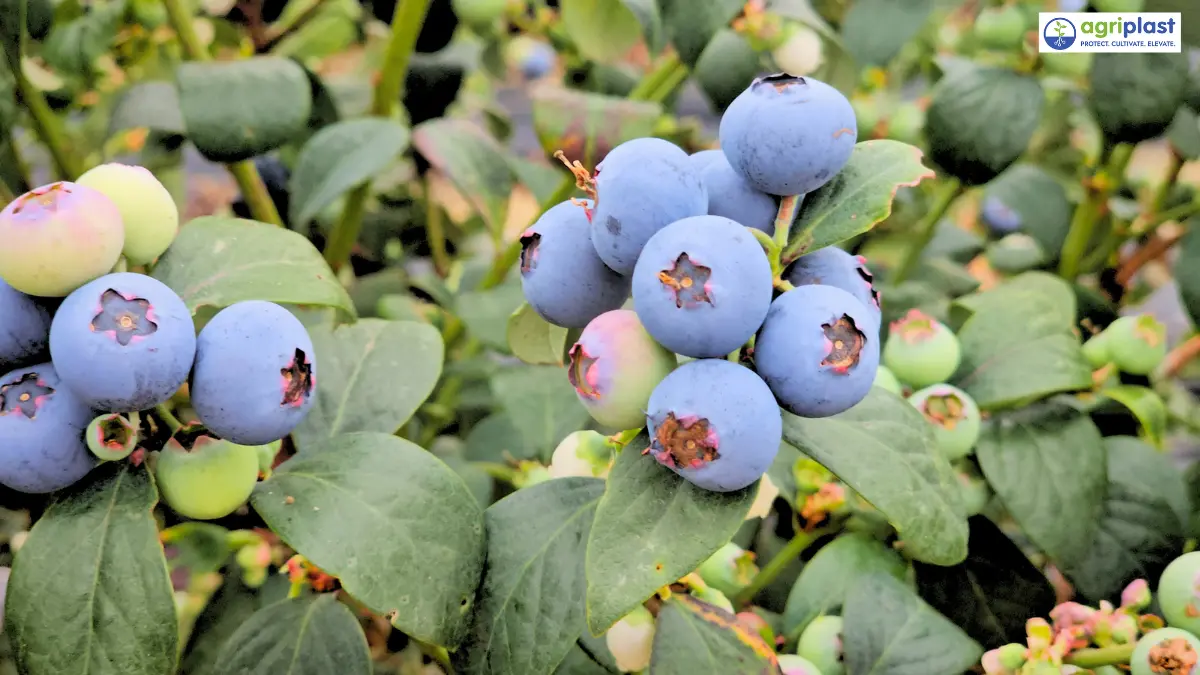
Can Blueberries Grow in India? Understanding Growing Conditions
Yes, blueberries can grow in India — but only when these core conditions are met.
1) Chilling Hours
Chilling hours refer to the total number of winter hours below 7°C. Traditional varieties require this cold exposure to break dormancy and initiate fruiting. Without adequate chilling, chill-dependent varieties will not produce a proper crop.
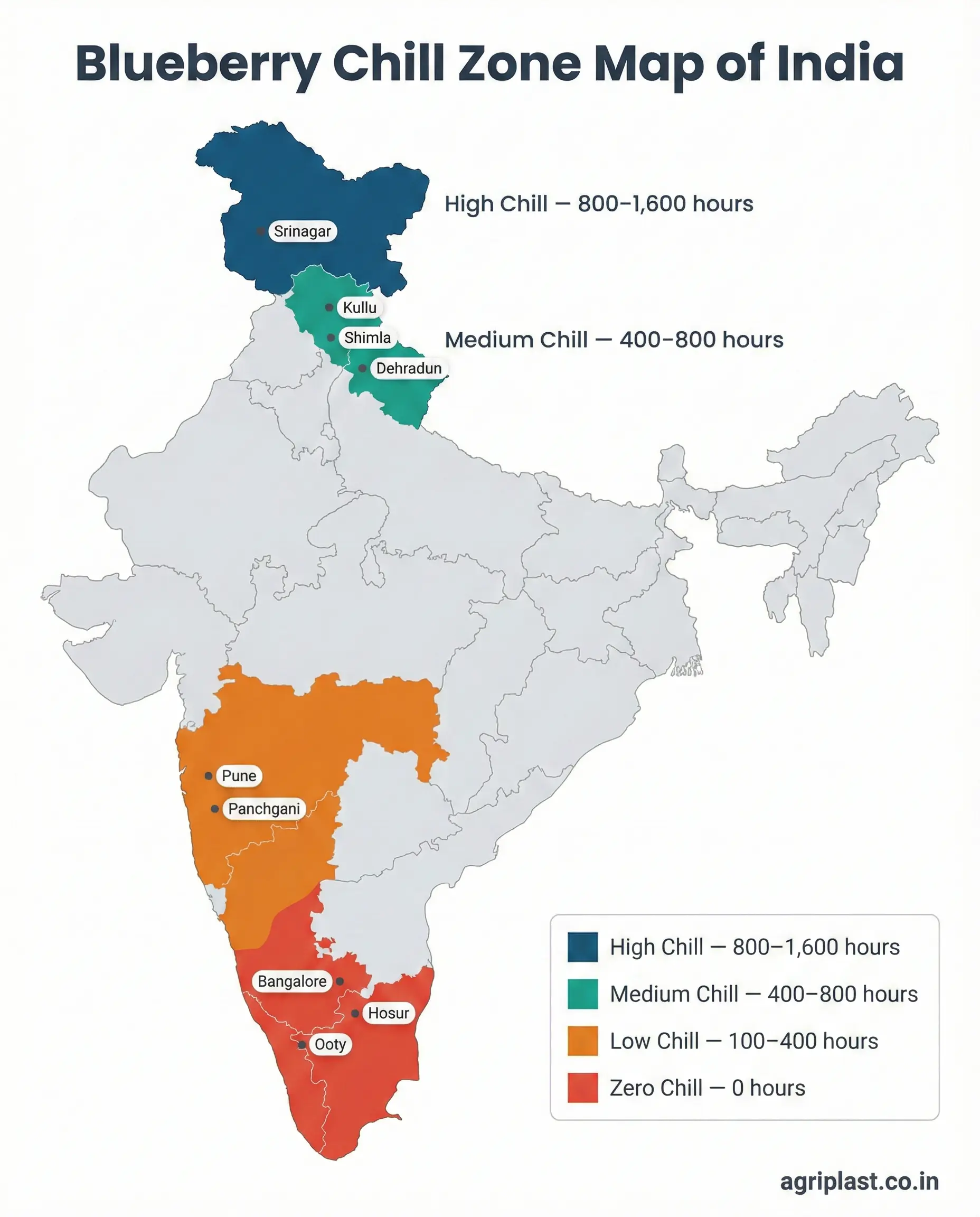
Blueberries fall into four chilling categories, and India's diverse agro-climatic zones can support each of them:
| Category | Chilling Hours | Suitable Indian Regions |
|---|---|---|
| High Chill (Northern Highbush) | 800–1,600 hrs | Kashmir, Upper Himachal Pradesh |
| Medium Chill | 400–800 hrs | Kullu (HP), Uttarakhand valleys |
| Low Chill (Southern Highbush) | 100–400 hrs | Maharashtra, parts of Karnataka |
| Zero Chill | 0 hrs | Bangalore, coastal & South India |
In South, West, and Central India, growers must choose low- or zero-chill varieties such as Biloxi, Emerald, and proprietary cultivars like Falcon and Cupla. These evergreen types do not depend on winter dormancy for flowering.
2) Root Zone / Substrate Management
Soil acidity is non-negotiable. Blueberries require a strongly acidic root environment.
Ideal Root zone parameters are:
- Ideal pH: 4.5–5.5
- Highly sensitive to alkaline soil
- Higher pH restricts nutrient uptake
Because most Indian soils are alkaline, commercial growers use grow bags filled with soilless media such as cocopeat mixed with pine sawdust. This ensures precise control over pH and nutrient delivery.
Need help setting up a soilless system? Explore Agriplast's complete range of soilless growing solutions built for substrate-based cultivation of high-value crops.
3) Water Quality
Blueberries are highly sensitive to dissolved salts in irrigation water. Source water EC must be tested before any investment — if it is too high, the project is not viable. Detailed thresholds are covered in Step 1 (Site Feasibility) and Step 6 (Fertigation).
4) Temperature & Humidity
Blueberries perform best between 10°C and 35°C. Above 35–38°C, plants experience heat stress which halts photosynthesis and subsequent growth. In hotter regions, foggers are used to reduce ambient temperature by 5–6°C.
Relative humidity should remain between 50–70%. When it drops below 20%, plants reduce transpiration and growth slows. Protected cultivation helps stabilise this microclimate.
5) Ventilation & Air Exchange
Good airflow supports bee-assisted pollination and prevents heat buildup inside structures. Side curtains or roof vents are essential for proper air circulation.
Before you start your next project, remember to check these basic parameters. Onto the next one.
Best Blueberry Varieties for Indian Climate
Variety selection is the single most important decision in blueberry farming. More farms fail because of wrong variety choice than poor irrigation or nutrient management.
India is primarily suited for low- and zero-chill Southern Highbush (SHB) varieties. Northern Highbush (NHB) types are suitable only for high-altitude regions such as Himachal Pradesh and Kashmir.
Below are 10 varieties that perform under Indian conditions, each suited to specific climatic zones:
| Variety | Chill Needs | Best Region | Key Feature | Berry Size |
|---|---|---|---|---|
| Legacy | Medium | Kullu, HP | Best all-round performer — size, production, keeping quality | 18–22 mm |
| Emerald | Low (100–150 hrs) | Maharashtra, Karnataka | Good size, versatile across zones | 14–18 mm, max 22 mm |
| Biloxi | Zero | Bangalore, South India | Royalty-free, most planted globally | Standard |
| Misty | Low-medium | Multiple zones | Reliable all-round variety | Standard |
| Duke | Medium-high | HP, Uttarakhand | Consistent berry size | Standard |
| Sharp Blue | Low | Western/South India | Royalty-free, beginner-friendly | Standard |
| Cupla | Zero | South India | High yield, disease resistant | Large |
| Albus (FL11-51) | Low | Transitional zones | Late season, excellent sweetness | Medium-large |
| Sentinel (FL11-155) | Medium-low | Versatile | Large concentrated yield | Large |
| Falcon | Low-zero | South India | Early season, adapted to zero chill | Large-very large |
A note on royalties: Free varieties like Biloxi, Emerald, Sharp Blue, and Misty have no royalty requirements. Patented varieties from breeding programmes require royalty payments, typically with a minimum volume threshold of 2,000–10,000 plants. If you are starting with 100–500 plants, it is practical to begin with royalty-free material. Larger commercial projects can evaluate patented genetics for higher performance potential.
Protected Cultivation Vs Open Field For Blueberries
Blueberries are traditionally grown in open fields in Western countries. In India, however, they are cultivated both in open fields and under protected systems — most commonly in soilless substrate setups.
In Indian conditions, poly tunnels are generally preferred over fully enclosed polyhouses.
Blueberries require strong ventilation. Closed Polyhouses restrict airflow and can trap excess heat, while tunnel structures allow better air exchange and reduce heat stress.
Tunnels also provide:
- Protection from rain, which can split fruit and increase fungal risk during harvest
- Better humidity balance in hot, dry summers
- Partial light control
- Reduced bird damage through integrated netting
Open-field cultivation carries higher risk due to unpredictable rain, heat stress, low summer humidity, and bird pressure — all of which directly affect fruit quality and marketable yield.
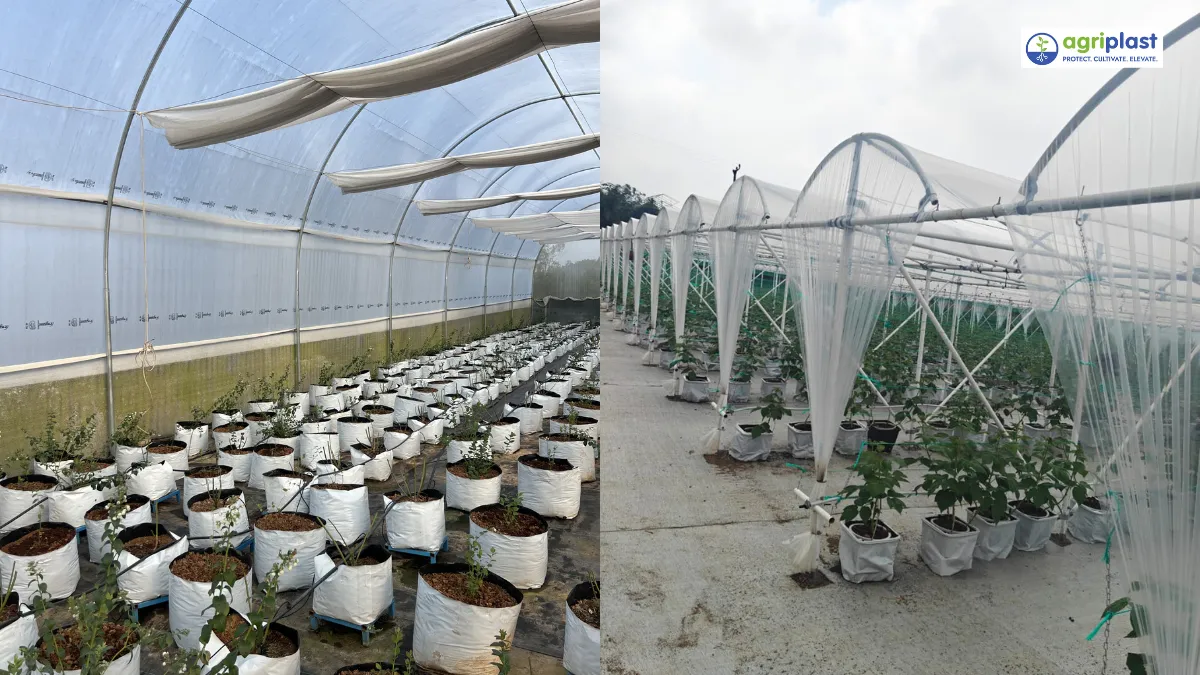
For most growers, dome-shaped poly tunnels combined with substrate cultivation offer the most practical and stable system. A typical blueberry protected setup also includes weed mat ground cover, grow bags or soilless troughs, and shade nets or aluminet nets based on local light intensity.
Wondering what soilless setup works best for blueberries? Check out Agriplast's Mapal soilless growing solutions — trusted by growers for substrate-based cultivation across India.
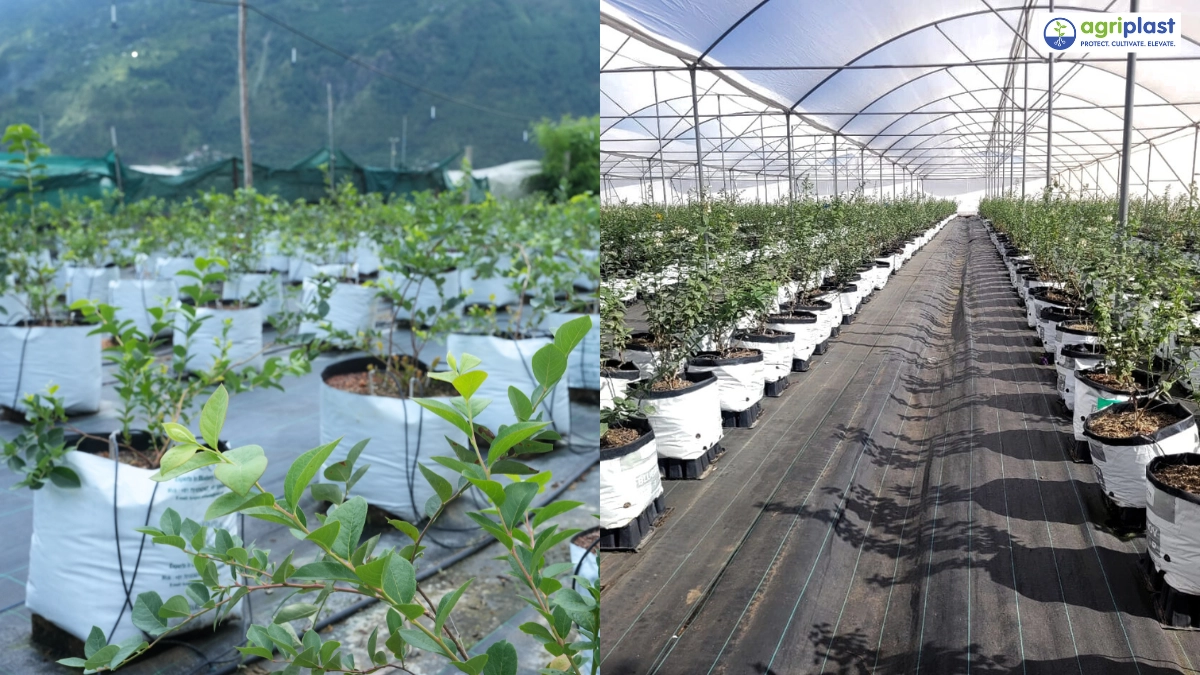
Open field blueberry cultivation (left) vs protected poly tunnel setup (right) — both using grow bags on weed mat. Tunnels offer better climate control, rain protection, and consistent fruit quality.
Blueberry Crop Cycle and Plant Lifespan (Soilless Farming Model)
Crop Cycle
| Phase / Stage | Timeline | What Happens | Expected Yield | Key Commercial Notes |
|---|---|---|---|---|
| Planting & Establishment | Year 0 | 1.5–2 year-old nursery plants transplanted into substrate bags/tunnels | Minimal | Use mature planting material to bypass juvenile stage |
| First Harvest | Year 1 (3–4 months after planting) | Early flowering begins quickly under Indian sunlight conditions | 0.5–1 kg per plant | Much faster than Western 3-year model |
| Yield Ramp-Up | Year 2 | Strong canopy development, structured pruning begins | 1.5–2 kg per plant | Fertigation intensity increases |
| Stabilisation Phase | Year 3 | Plant reaches commercial maturity | 3–4 kg per plant | Proper pruning determines long-term performance |
| Peak Production | Year 4–8 | Full canopy, strong cane renewal | 3–5 kg per plant (variety dependent) | Highest ROI years |
| Commercial Decline | Year 8–10 | Root binding, salt buildup, reduced vigour | Gradual reduction | Replanting typically planned |
Annual Crop Cycle & Planting Window (India)
| Zone Type | Recommended Planting Window | Dormancy / Cycle Break | Flowering | Harvest Window | Post-Harvest Action | Crop Duration |
|---|---|---|---|---|---|---|
| High / Medium Chill (North India) | Feb–March (after severe winter) | Nov–Jan (natural chill <7°C) | Feb–March | May–June (pre-monsoon) | Immediate pruning after harvest | ~90 days (flower to harvest) |
| Zero-Chill (South & West India) | Sept–Nov (aligned to market window; technically year-round) | No natural dormancy; pruning induces cycle | Managed via pruning | March–May | Immediate pruning to reset cycle | ~90 days (flower to harvest) |
Commercially, blueberries in India begin paying from Year 1, peak between Years 4–8, and are typically replanted after 8–10 years in substrate systems.
"In zero-chill regions, the shorter 7-month crop cycle makes it possible to harvest twice in 14 months through managed pruning. This is still experimental in India, but early results are promising.
— Agriplast Farmer Vishal Thakur"
How to Grow Blueberries in India: Step-by-Step Guide
Once you have clarity on climate, selected the right variety, and understood the crop cycle, the execution begins — here is a summarised step by step guide for your reference:
Step 1: Site Feasibility & Water Testing
Before purchasing even a single plant, confirm that your site can actually support blueberries.
Water quality is critical. Blueberries are highly sensitive to salts. Test your irrigation water first — Electrical Conductivity (EC) should ideally be below 0.8 mS/cm. High EC water will damage the crop.
Climate check: Confirm your location falls within the viable temperature and humidity ranges outlined in the Growing Conditions section above. If summers regularly exceed 35°C, budget for shade nets and foggers from the start.
Soil reality: Most Indian soils are alkaline (pH 6.5–7.5), far above what blueberries need. Permanently correcting soil pH is extremely difficult, which is why commercial growers prefer soilless cultivation in grow bags.
If your water and pH are wrong, nothing else will fix it.
Step 2: Soil & Media Preparation
Blueberry roots are fine and shallow. They cannot tolerate compaction. The root zone must be loose, well-drained, and acidic (pH 4.5–5.5).
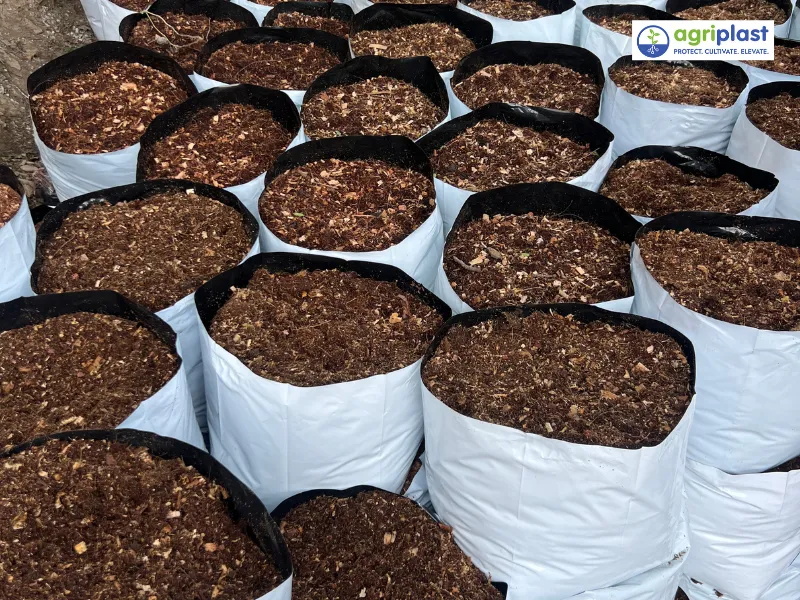
In India, growers typically use 50-litre grow bags or troughs filled to 40–45 litres with:
- 60% cocopeat — moisture retention
- 20–30% pine sawdust — gradual pH reduction (coco chips can substitute where pine is unavailable)
- Elemental sulphur — long-term pH adjustment
- Vermicompost — base nutrition
- Coco fibre — aeration and drainage
Blueberries hate "wet feet." Proper Drainage is non-negotiable.
Step 3: Variety Selection
Your selection must match your region's chill hours and climate. When evaluating varieties, also consider flowering window overlap (needed for cross-pollination) and whether the variety carries royalty obligations that affect your minimum planting scale.
Refer to the variety table earlier in this blog for a complete breakdown of 10 varieties suited to Indian conditions.
Step 4: Infrastructure Setup
Infrastructure decides whether your crop survives Indian weather.
Weed mat Is mandatory. With daily drip irrigation, weeds will take over without ground cover. Agriplast offers purpose-built weed mat solutions for high-value crop systems.
Fogger system is essential in hot regions. Foggers can reduce ambient temperature by 5–6°C on extreme days. Combine with shade net solutions to manage heat stress.
Anti-bird netting is non-negotiable. Birds can destroy the entire harvest. Anti-hail and bird netting from Agriplast protects fruit without blocking airflow.
Tunnel structure — highly recommended. Open-field farming is cheaper but riskier. A walk-in tunnel with insect netting on the sides and greenhouse film on top protects fruit from rain and reduces climatic stress.
Blueberries reward protection.
Step 5: Planting
Planting sets the foundation for the project. Uniform growth and early establishment matter.
In North India, plant between February and March after winter. In South and West India, planting can be done year-round, as flowering is managed through pruning — but avoid peak heat times for planting.
For commercial setups, use 1.5–2 year-old potted plants. They reduce mortality and can produce within 3–4 months under Indian conditions. Tissue-culture plants are preferred for uniformity.
In intensive substrate systems, follow:
- 2–3 feet plant-to-plant
- 8–10 feet row-to-row
- 2,500–3,000 plants per acre
Plant at least two compatible varieties in alternating rows for better pollination.
Plant into prepared grow bags (see Step 2) at nursery depth and ensure strong drainage.
Correct planting reduces losses and improves early returns.
Step 6: Irrigation, Fertigation & Nutrition
This is the most technical part of blueberry farming — and where most projects fail.
Blueberries have shallow, fibrous roots that need consistent moisture without saturation.
Irrigation (low and slow):
- Drip irrigation is mandatory
- Frequent, low-volume pulse irrigation
- Water EC must remain below 0.8 mS/cm
In grow bag systems, nutrition must be supplied daily because the substrate has low buffering capacity.
Fertigation (daily feeding):
- ~1 gram fertiliser per litre of water
- Roughly 2.5 kg per day for 2,500 plants (stage dependent)
- Balanced NPK plus micronutrients
Blueberries prefer ammonium-based nitrogen, not nitrate-heavy fertilisers. Nitrates tend to raise pH and reduce uptake.
pH is the master control factor:
- Maintain root zone pH between 4.5–5.5
- High pH locks nutrients
- Acid injection is often required in commercial systems
If you are not ready for precision monitoring of EC and pH, this crop will expose errors quickly.
Step 7: Pruning & Pollination
Blueberries are tip-bearing plants, which means fruit develops on new branch tips. More healthy new growth means more fruiting sites.
- Prune immediately after harvest.
- Remove weak base shoots, inward or crossing branches, and keep the centre open for airflow.
- If plants grow excessively tall, use a hard cut to push fresh lateral growth.
In Zero-Chill regions, pruning also helps reset and manage the crop cycle.
Consistent pruning maintains vigour and supports a commercial life of 8–10 years in substrate systems.
Pollination & Ventilation
Blueberries depend on wind and bees for proper fruit set. Avoid fully closed polyhouse systems that restrict airflow. Use ventilated tunnels and introduce bee hives where natural pollination is low.
Poor ventilation leads to weak fruit set and misshapen berries.
Step 8: Pest & Disease Management
Blueberries often appear in global "Dirty Dozen" lists due to industrial pesticide use. But in Indian conditions, the experience has been different.
Based on the field experience of blueberry farmer Vishal Thakur and farming expert Bharat Bhojane, pest pressure is relatively low compared to vegetables.
The biggest threat is birds, particularly if you are growing blueberries in open field.
Install anti-bird netting — without it, you can lose the entire crop.
Monitor for:
- Thrips during flowering
- Mites in some regions
- Occasional white grubs in grow bags
Also stay alert for:
- Spotted Wing Drosophila
- Botrytis in wet conditions
- Root rot from waterlogging
Most issues increase when ventilation and irrigation are mismanaged.
A simple tunnel and proper monitoring reduce the need for heavy spraying.
Step 9: Harvest & Post-Harvest Management
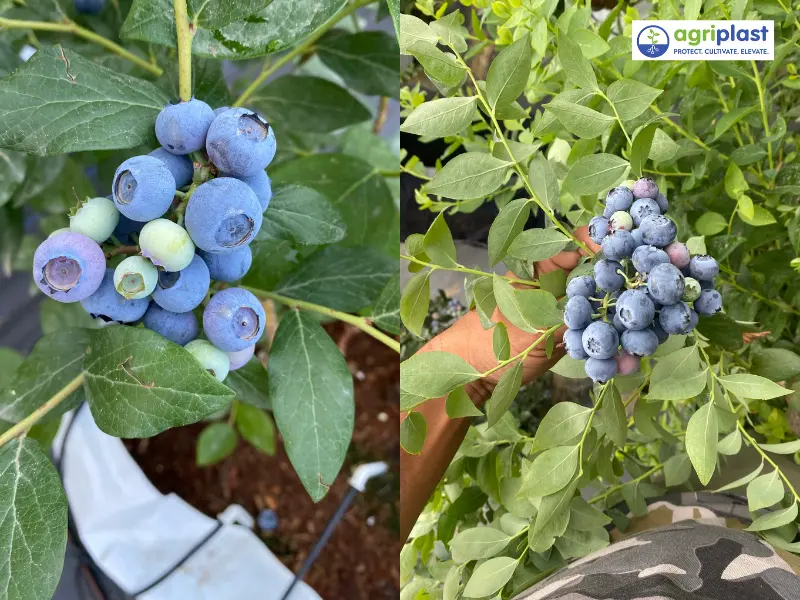
Blueberries are fragile. Profit is decided at harvest.
In North India, harvest runs May to mid-June. Rain during ripening can split fruit. If harvest overlaps with monsoon, tunnels become essential.
Harvest is manual. Labour demand peaks here.
Size determines price:
- 18–20 mm+ = premium
- 16–18 mm = export grade
- Smaller fruit = lower price
Grade strictly. Do not mix damaged fruit.
Standard format: 125g clamshell punnets, 12 per tray.
Cold chain is critical. Without cooling, quality drops fast. IQF freezing (-18°C) is viable only at scale.
Some farms near cities experiment with U-Pick to reduce labour and capture retail margins.
Investment & ROI: How Much Does Blueberry Farming Cost Per Acre?
Blueberry farming is capital intensive. This is not a low-budget crop. High Investment High Return Potential.
The numbers below reflect field experience from Indian growers and commercial operators. These are representative models and not guarantees.
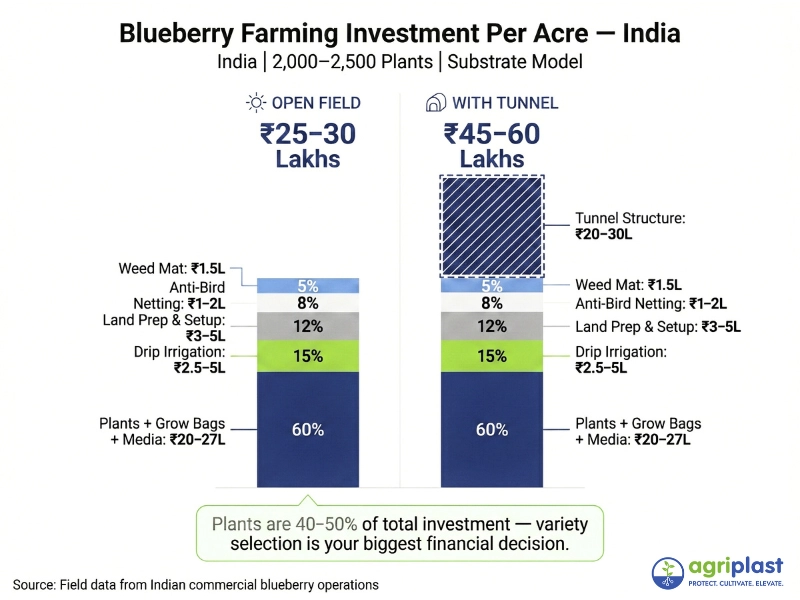
1️⃣ Capital Investment (Per Acre)
Open Field – Substrate Model
| Component | Approx Cost |
|---|---|
| Land preparation & basic setup | ₹3–5 lakhs |
| Weed mat | ₹1.5 lakhs |
| Drip irrigation | ₹2.5–5 lakhs |
| Plants + grow bags + media (₹1,000–1,100 × 2,000–2,500 plants) | ₹20–27 lakhs |
| Anti-bird netting | ₹1–2 lakhs |
| Total (Open Field) | ₹25–30 lakhs |
With Tunnel Structure (Protected Cultivation)
Add ₹20–30 lakhs per acre for a good-quality commercial tunnel system.
| Total (With Structure) | ₹45–60 lakhs |
Lower-cost structures exist, but under-engineered tunnels become liabilities in wind, rain, and heat. In high-value crops like blueberries, weak infrastructure can be costly.
"Polytunnel vs Open Field Blueberry Farming: Which Setup Works Better in India?" Will cover in a separate blog post.
Production Estimate (2,000–2,500 Plants)
| Year | Yield / Plant | Total Production |
|---|---|---|
| Year 1 | 0.5–1 kg | 1–2.5 tonnes |
| Year 2 | 1.5–2 kg | 3–5 tonnes |
| Year 3 | 3–4 kg | 7–10 tonnes |
| Year 4+ | 3–5 kg | 6–12 tonnes |
(Variety and management dependent.)
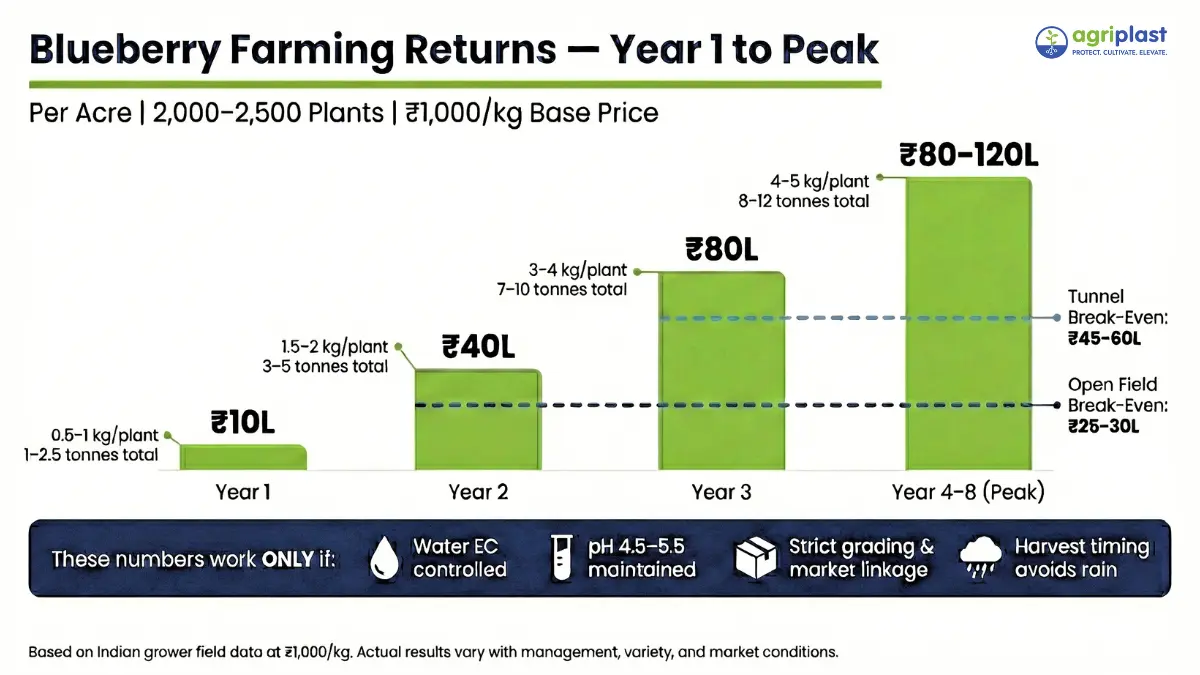
Revenue Estimate (₹1,000/kg Base Case)
| Year | Production | Revenue |
|---|---|---|
| Year 1 | ~1 tonne | ₹10 lakhs |
| Year 2 | ~4 tonnes | ₹40 lakhs |
| Year 3 | ~8 tonnes | ₹80 lakhs |
| Year 4–8 (Peak) | ~8–12 tonnes | ₹80–120 lakhs |
| Year 8–10 (Decline) | Gradual reduction | Varies |
Break-even is typically achieved between Year 2 and Year 3 under stable pricing.
Serious growers should also test viability at lower price assumptions (₹800/kg or even ₹500/kg) for long-term sustainability.
That being said —
Blueberry farming or any kind of farming is not done on Excel.
These numbers work only if:
- Water EC is controlled
- Root zone pH stays 4.5–5.5
- Fertigation is precise
- Variety matches climate
- Harvest avoids rain
- Grading is strict
- Market linkage is strong
This crop rewards discipline.
If managed properly, returns can be exceptional.
If mismanaged, the same numbers collapse quickly.
Subsidy Support for Blueberry Farming in India
Blueberry is covered under MIDH and NHB schemes, with subsidies of 40–50% on open-field projects and up to 50% on protected cultivation (tunnels/polyhouses), depending on the state.
Drip irrigation is supported under PMKSY (45–55%), and additional assistance is available for cold storage, pack houses, and nursery/tissue culture units.
Subsidy percentages are higher in Himalayan and North-Eastern states, and planting material must be purchased from government-approved nurseries to remain eligible.
Things to Keep in Mind Before You Start Blueberry Farming In India
☑ Water First.
Check EC. If EC is above 0.8 mS/cm, do not proceed. Test before investing.
☑ pH Is Non-Negotiable.
Blueberries need 4.5–5.5. Most Indian soils don't — plan for soilless systems.
☑ Variety Selection
Match chill hours to your region. Buy verified tissue-culture plants only. Zero chill varieties are ideal for India.
☑ Master Fertigation Early.
Daily drip feeding, ammonium-based nitrogen, strict EC and pH control — this is where most farms fail.
☑ Protection Is Insurance.
Rain, heat, and birds can destroy a crop. Tunnels will be more expensive initially but yield better results in the long run.
☑ Plan the Market Before Planting.
Blueberries are perishable — secure buyers, cold chain, and grading discipline in advance.
☑ Understand the Capital Reality.
Open field: ~₹25–30L/acre. With tunnels: ~₹45–60L/acre. This is serious capital.
☑ Start Small — But Think Commercial.
Learn on 0.25–0.5 acre, but long-term viability usually requires 4–5 acres for economies of scale.
Frequently Asked Questions
- Year 1: Operationally positive but CAPEX not recovered
- Year 2–3: Break-even typically achieved
- Year 3 onward: Strong profitability possible under stable pricing
Blueberry farming in India today is where strawberry farming was 10–15 years ago — early stage, but full of potential.
If you are planning a blueberry project, Agriplast can help with weed mat, shade nets, insect netting, and greenhouse films built for high-value crop systems. Talk to our team to get a customised infrastructure plan for your farm.
Want to learn more about high value polyhouse crops? Read our capsicum farming in polyhouse blog here.
Blog written and Posted by
Abhinav Roy
Abhinav Roy is an agribusiness professional, agricultural communicator, and host of AgriTalk by Abhinav Roy. He works closely with farmers, agripreneurs, across India to simplify complex agricultural technologies into practical, field-ready insights. With hands-on exposure to protected cultivation, crop protection systems, and farm economics, Abhinav focuses on bridging the gap between science, sustainability, and scalable farming solutions.You can write your view/comments here

🫐 Thinking About Growing Blueberries?
Let India's leading protected cultivation experts help you get it right
From poly tunnel materials and shade nets to hydroponic substrate systems — we'll help you plan the complete infrastructure for a profitable blueberry farm.
WhatsApp Our TeamNeed Expert Assistance?
Get personalized recommendations for your greenhouse, polyhouse, or irrigation needs.
-
Bengaluru (Corporate Office)
- 918141446666
- support@agriplast.co.in
WeWork Roshni Tech Hub - 1st floor, PFS Club House, Marathahalli Main Rd, R.J.Gardens, Lakshminarayana Pura, EPIP Zone, Chinnapanna Halli, Bengaluru, Karnataka 560037