28 Polyhouse Crops You Can Grow In India
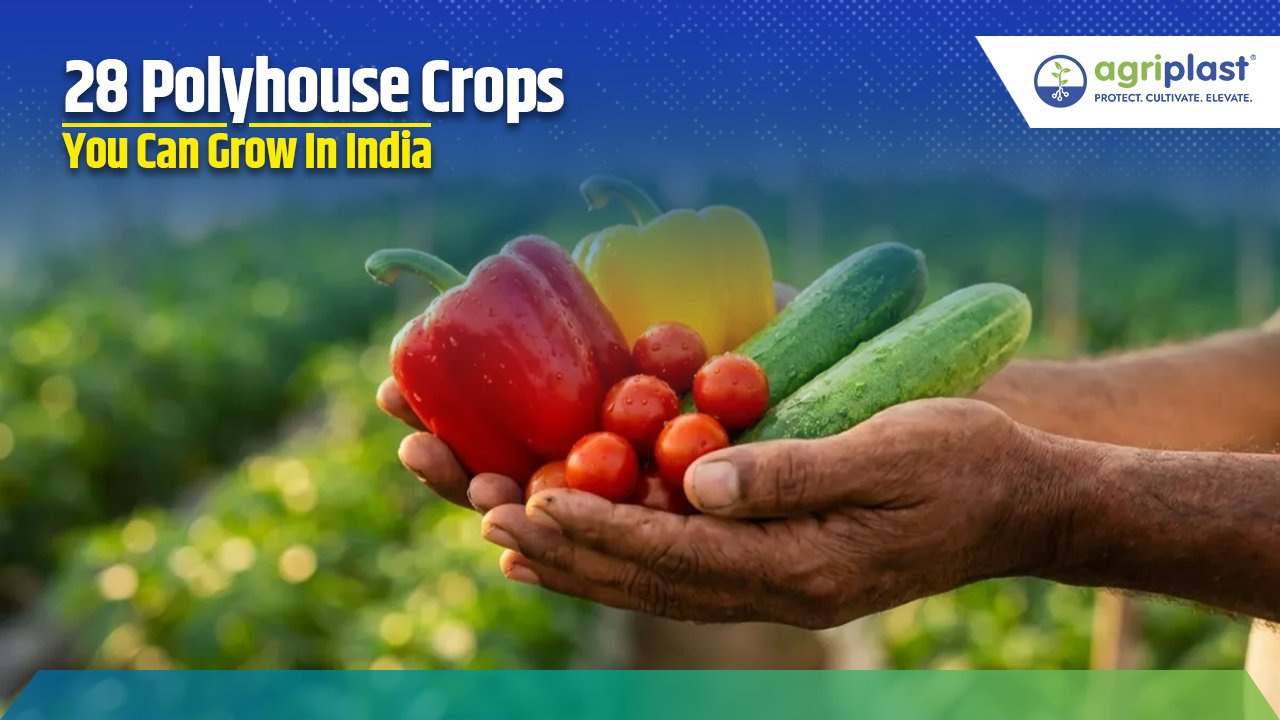
Everyone who wants to enter hi-tech agriculture or build a polyhouse eventually faces the same questions:
- Which crop should I grow in my polyhouse?
- What crops are actually suitable for polyhouse farming?
- Which crop is the most profitable?
- Which one will give me the fastest return on investment?
The honest truth?
There is no single, universal answer.
The right crop depends on many factors—your local climate, market demand, logistics, your own experience, and the buyers you can access. Polyhouse farming is not a shortcut to quick money. It is a combination of the art of growing and the discipline of running a business.
Over the past two decades, Agriplast has worked with thousands of farmers across India and around the world. Our greenhouse films and products have supported their journeys across a wide range of crops. Because of this, we constantly see new crop innovations, success stories—and also the common mistakes farmers make.
In this blog, we’ll walk you through 28 crops grown successfully in Indian polyhouses—from popular, time-tested choices to newer crops and even a few hidden gems with strong business potential.
And this isn’t an AI-generated list or a random compilation from the internet.
It’s a practical, experience-based guide built on crops we’ve personally seen farmers grow successfully.
Why Does Crop Choice Matter?
A polyhouse is expensive real estate. You are investing ₹40–60 lakhs per acre on the structure alone, and the only real driver of ROI is the crop you choose. That is why crop selection must be a calculated, informed decision—not a guess or a trend you saw online.
Before choosing a crop, you must evaluate a few critical parameters:
1. Market Demand & Proximity to Buyers
Ask yourself:
- What is the demand for this crop in nearby markets?
- Who are the buyers?
- Where are they located?
- How far is the market from my farm?
2. Crop Requirements vs Local Climate
Ask yourself:
- What are the ideal growing conditions for this crop?
- Does my local climate support these conditions?
- Will I need additional climate control to make it work?
3. Your Growing Expertise
Ask yourself:
- How technical is this crop?
- Does it require advanced management, pruning, fertigation, or climate control?
- Do I have the skills—or access to guidance—to manage it properly?
Before you decide what to grow, these factors must be carefully analysed.
Don’t grow what your neighbour grows. Grow what your market needs.
A farmer located 30 km from Bangalore, supplying colored capsicum to hotel chains, will almost always perform better than someone 300 km away growing the same crop without a reliable buyer.
Which Are The Best Polyhouse Crops?
Before we get into the list of best polyhouse crops, understand the best crop is the one best suited for you and your climatic conditions, that being said here is the list of the top 24 crops as per our studies:
- Colored Capsicum
- Seedless Cucumber
- Tomato
- Leafy Greens
- 12 Floriculture Crops
- Berries (Blueberries, Strawberries & Raspberries)
- Spices ( Turmeric & Ginger )
- Nursery / Young Plant Business
- Ornamental Plants / Potted Plants
- Herbs
- BONUS ( Musk Melon, Vanilla & Eggplant )
The Popular Polyhouse Crops - Where Most Farmers Start
If you ask any polyhouse consultant what crops to grow first, these three will almost always top the list. They have proven market demand across India, well-established supply chains, and plenty of farmers you can learn from.
1. Coloured Capsicum (Bell Pepper)
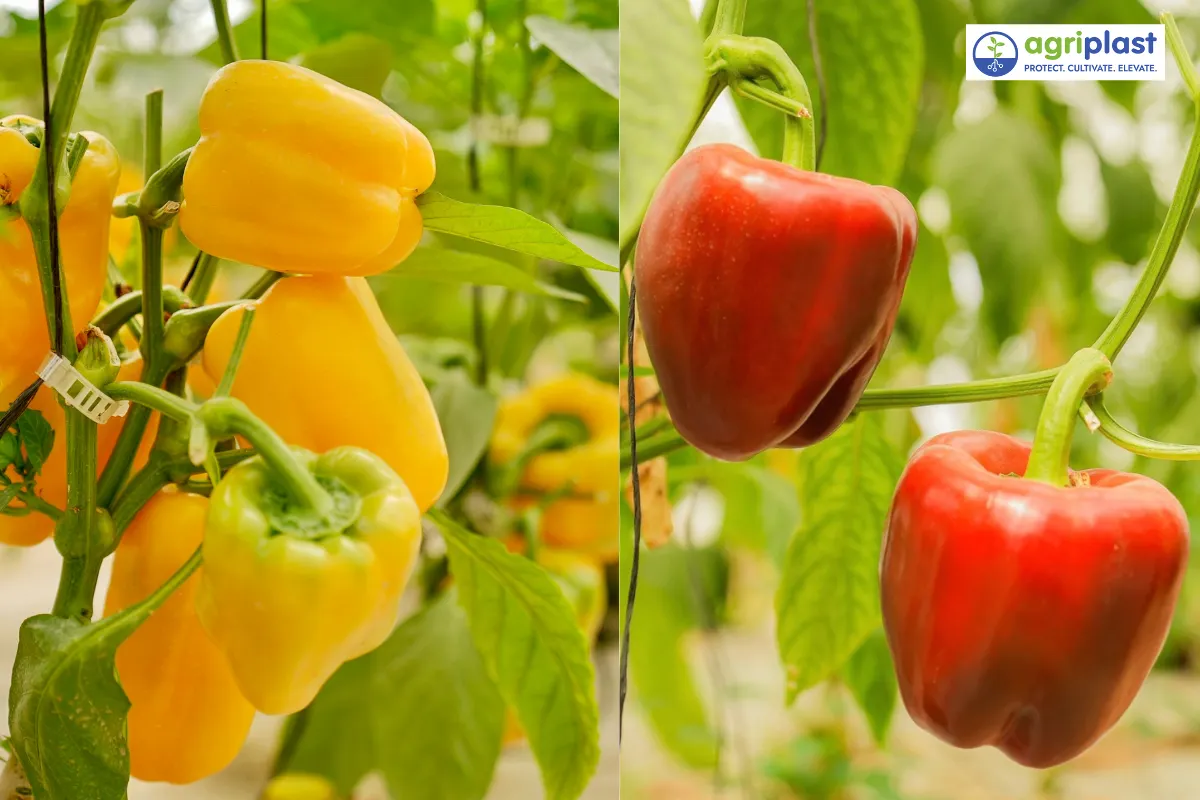
Coloured capsicum – one of the most profitable polyhouse crops in India
Coloured Capsicums Or Bell Peppers are one of the most Popular polyhouse crops in India over the last few years. While Green Capsicums are grown in the open field, coloured capsicum varieties require control climatic conditions of a polyhouse for proper growth and fruiting
Since they can only be grown in polyhouses they present a strong case of polyhouse crops.
Overview Of Coloured Capsicums
| Parameter | Details |
|---|---|
| Crop Cycle | 9 months Total Crop Cycle 90 Days To First Crop |
| Ideal Temperature | 18–35°C |
| Relative Humidity | 50–70% |
| Average Yield per Plant | 2–3 kg per plant |
| Expected Yield | 20–30 tonnes per acre 30–40 tonnes per acre (Bangalore, Himachal, Maharashtra) |
| Main Buyers | Hotel chains, pizza outlets, supermarket chains, export markets |
| Selling Price | Lowest: Rs. 40-Rs 50/ Kg Peak: Rs 300/ Kg Average: Rs. 70- Rs 100/ Kg |
Pro Tip: Coloured Capsicums have a major issue with Thrips, so proper hygiene and growing practices must be followed. Using agriplast’s Insect Net Solutions can help reduce external pest attacks and pesticide usage.
For a detailed deep dive on coloured capsicum farming in polyhouse, read our complete guide to capsicum farming in polyhouse.
2. Seedless Cucumber
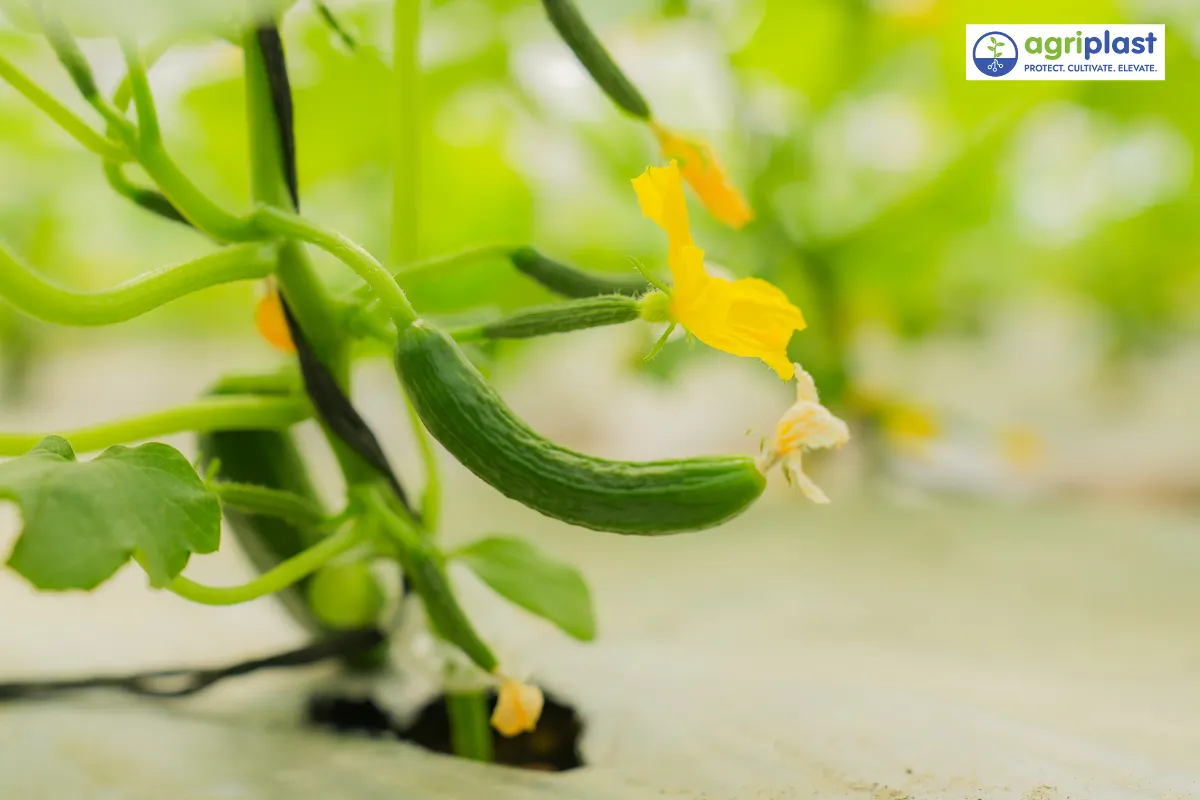
Fresh seedless cucumber growing inside polyhouse farming
Go to Rajasthan, and you will find hundreds of acres of seedless cucumbers growing inside polyhouses. With a short crop cycle of just a few months, cucumber has become one of the most popular polyhouse crops in India.
Many farmers combine it with colorued capsicum to create a full-year crop calendar—cucumber as the short 3–4 month crop for quick cash flow, followed by capsicum as the longer 8–9 month crop for stable returns.
Parthenocarpic (seedless) cucumber varieties are specially bred for protected cultivation. They do not require pollination, and the fruits grow straight, uniform, and market-friendly. If you grow only cucumbers, you can take 2–3 crop cycles per year from the same structure.
Pro Tip: If you are growing in soil, then make sure to give your soil adequate nutrition and time to recover between crop cycles. Continuous mono-cropping can deplete the soil of nutrients and subsequently reduce crop yield.
| Parameter | Details |
|---|---|
| Crop Cycle | 4–5 months total (2 crops/year in soil; soilless can go 10–12 months) |
| Ideal Temperature | 18–35°C |
| Relative Humidity | 50–70% (dry crop — high humidity causes fungal issues) |
| Average Yield per Plant | 4–6 kg per plant |
| Expected Yield | 30–40 tonnes per acre per crop cycle |
| Main Buyers | Wholesale mandis, supermarket chains, hotels, restaurants, salad bars |
| Selling Price | Lowest: ₹8–10/kg · Peak: ₹40–60/kg · Average: ₹15–25/kg |
3. Tomatoes
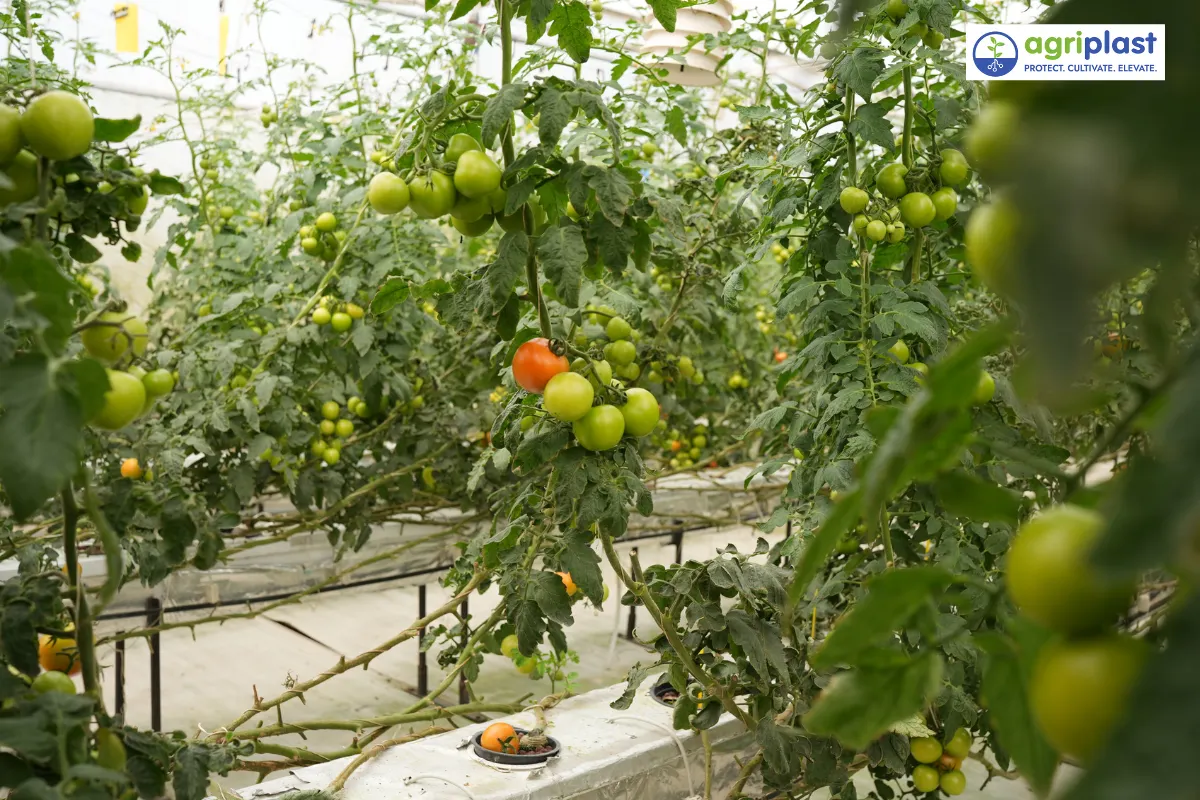
Tomato plants growing vertically inside a polyhouse using trellising
Now, mind you tomatoes are a very tricky crop to grow because unlike coloured capsicum, regular tomatoes can be grown in open field conditions with just mulching very easily. However, indeterminate varieties grow vertically on strings, produce for 6-8 months continuously, and can yield 3-4 times what open-field tomatoes give you.
Similarly cherry tomatoes are a unique variety to polyhouse which can sell at premium rates of Rs. 80 to Rs. 150/kg in the right market.
Pro Tip: Tomato undergoes major price fluctuations hence market study and supply planning must be done carefully to avoid price dips.
| Parameter | Details |
|---|---|
| Crop Cycle | 6–8 months total (long-duration indeterminate crop) |
| Ideal Temperature | 18–30°C |
| Relative Humidity | 60–75% |
| Average Yield per Plant | 6–10 kg per plant |
| Expected Yield | 50–80 tonnes per acre per crop cycle (can reach 80–100 tonnes in well-managed systems) |
| Main Buyers | Wholesale mandis, supermarket chains, processors, hotels, restaurants |
| Selling Price | Lowest: ₹8–12/kg · Peak: ₹50–70/kg · Average: ₹20–35/kg |
4. Leafy Greens
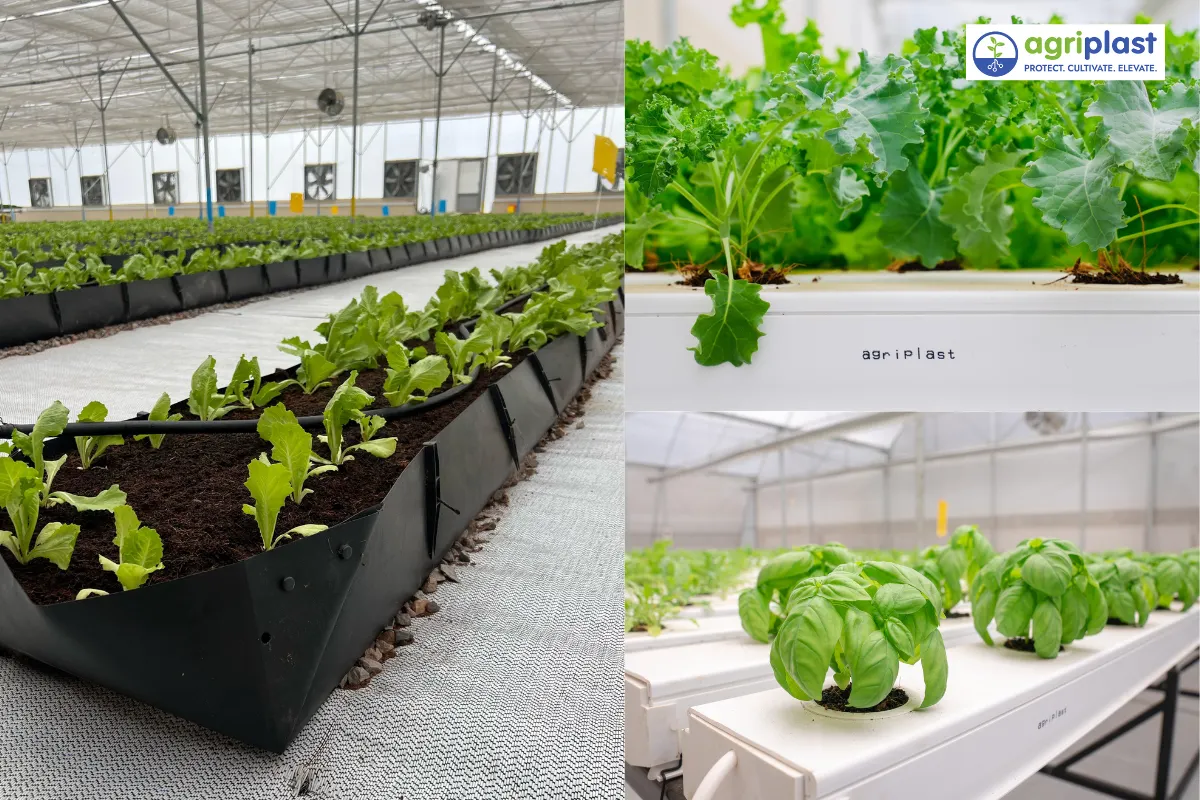
Leafy greens grown as polyhouse crops in a hydroponic setup
Leafy greens are the ATM machines of polyhouse farming—short cycles, low risk, and continuous harvests. These are fast-growing crops where the leaves are the main harvestable part, such as lettuce, spinach, kale, pak choi, arugula, and salad mixes. Most of them are grown in quick cycles and supplied fresh to the market, often through hydroponic systems.
Like tomatoes, leafy greens are not limited to polyhouses. They can be grown in open fields, net houses, polytunnels, and various hydroponic systems such as grow bags, soilless troughs, or even Nutrient Film Technique (NFT) setups.
Why does this matter? Because each growing method is different. It requires a different level of investment, infrastructure, and technical skill. Choosing the right system is just as important as choosing the right crop.
The two most commonly used systems for leafy greens are Soilless Trough Systems and NFT Systems.
5. Floriculture
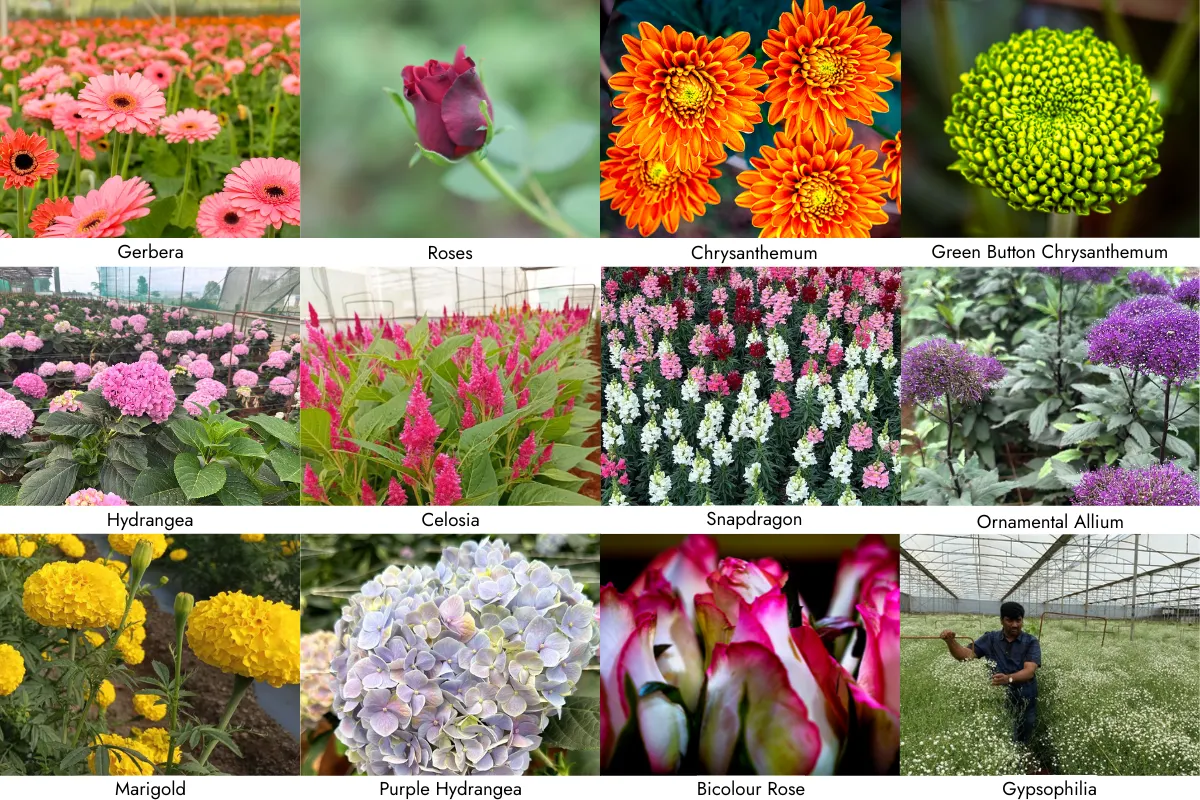
Different Floriculture Crops Being Grown Under Polyhouses
When most people think of polyhouse crops, they think of vegetables—and sometimes fruits, which we will cover later. But many overlook one of the biggest opportunities in protected cultivation: floriculture.
Floriculture is a world of its own, but some of the most common polyhouse flowers include roses, chrysanthemum, gerbera, gypsophila, sunflower, and carnation. The Indian market is also seeing newer, high-value varieties such as:
- Lisianthus (Eustoma)
- Trachelium
- Delphinium
- Limonium (Statice)
- Snapdragons
- Hydrangea
Not all flower crops follow the same business model. Some, like roses, are long-duration crops that can produce for 5–6 years. Others, like gerbera, are shorter-duration crops with a productive life of 2–3 years.
On average, when managed well and grown at a commercial scale, floriculture can generate ₹10–15 lakhs per acre as a stable margin.
Agriplast farmers like Shrikant Bolapally grow over 19 varieties of flowers in polyhouses using Ginegar Agriplast greenhouse films and other solutions—showing the scale possible in this segment.
Each crop has its own growing method and market dynamics, which we will cover in separate blogs. In the meantime, you can explore our guide on rose cultivation in India.
Flower quality in a polyhouse depends heavily on the covering material. Using proper greenhouse film with UV stabilization and light diffusion properties directly impacts flower color, stem length, and vase life.
6. Berries
Berries—everyone’s favourite and one of the most talked-about crop categories in recent years. While berries are relatively new to commercial cultivation in India and are native to Western countries, both the production and consumption of berries in India have grown rapidly.
Berries typically refer to a group of soft, high-value fruits such as strawberries, blueberries, and raspberries, which are known for their premium pricing, short shelf life, and strong demand from urban consumers, supermarkets, and the food service industry.
Unlike traditional polyhouse crops, most berries in India and the worls are grown under polytunnels or low-cost protected structures, which help regulate temperature, protect the crop from rain and frost, and improve fruit quality. Let’s Understand them briefly
Strawberries
Traditionally grown in the western parts of Maharashtra and the cooler hills of Ooty, strawberries have mostly been an open-field crop in India. However, with climate change and increasingly erratic weather, many growers are now shifting toward polytunnels and protected structures.
Do you need a polyhouse to grow strawberries? Not necessarily. But protected cultivation can offer better control over rain, temperature, and fruit quality.
For example, our farmer Suresh from Ooty is growing strawberries inside a polyhouse and achieving excellent results in terms of consistency and fruit quality.
Read Our detailed guide to learn more about strawberry farming.
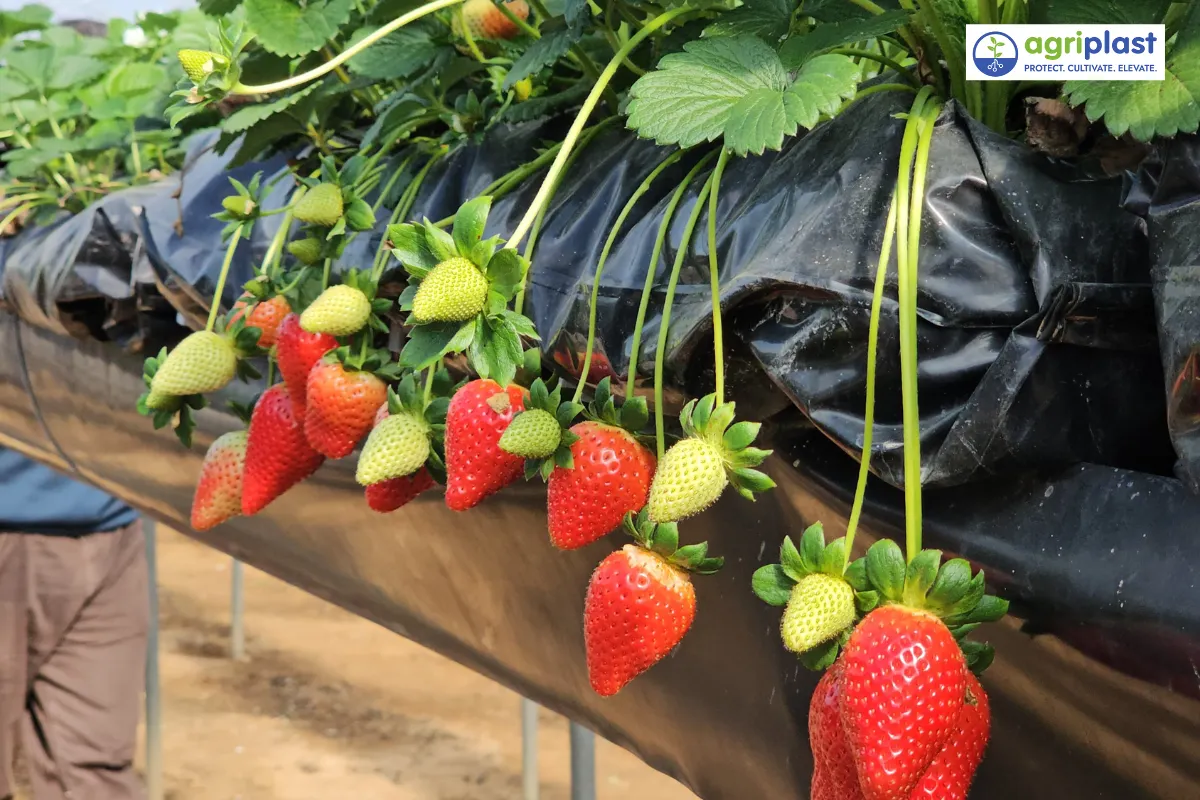
Soilless Strawberries Growing Under Polytunnel Structures
Blueberries
A newer berry entry to India, blueberries have gained immense popularity in both production and consumption. Everyone wants to grow blueberries but Blueberries require acidic growing conditions (pH 4.5–5.5), controlled irrigation, and often soilless or substrate-based systems under polytunnels or protected structures.
The plants also have a longer gestation period of 2–3 years before full commercial yields, which makes them better suited for experienced growers, organized farming clusters, or investors with a long-term outlook.
Read Our Detailed Guide On Blueberry Farming in India.
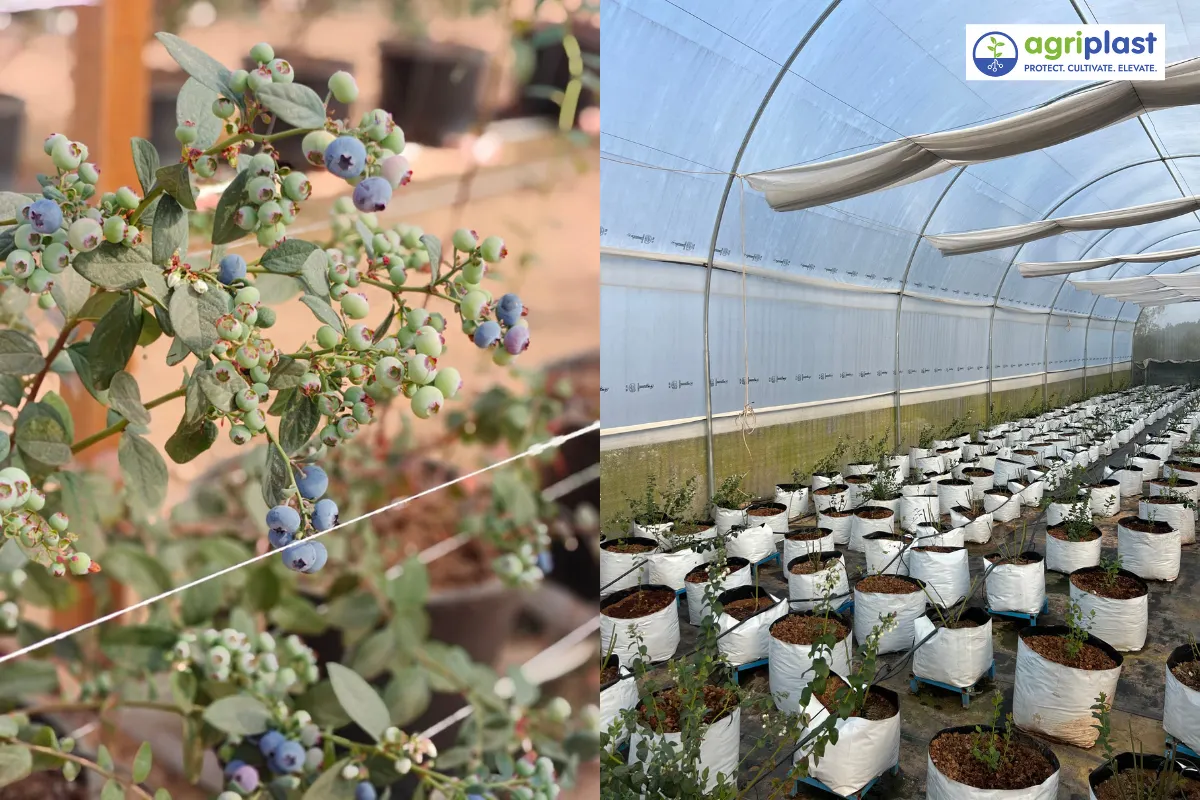
Blueberries Being Grown in Polytunnel structures In Ooty with Ginegar Agriplast Polyfilms
Raspberries
Raspberries are an emerging premium berry crop in India, still in the early stages of commercial cultivation. They are valued for their high market price, attractive appearance, and strong demand from gourmet markets, bakeries, and premium retail chains.
Modern primocane varieties can start fruiting within 4–6 months after planting, offering quicker returns compared to some other berries. However Like blueberries, raspberries require careful climate management, protected structures like polytunnels, and proper post-harvest handling due to their delicate nature, making them more suitable for technically supported or experienced growers.

Agriplast Farmer Growing Raspberries In Maharashtra
| Parameter | Blueberry | Raspberry | Blackberry |
|---|---|---|---|
| Crop Cycle | 2–3 years to full production; perennial crop | 4–6 months to first harvest (primocane types); perennial | 8–12 months to first harvest; perennial |
| Ideal Temperature | 15–30°C (variety dependent) | 15–28°C | 18–30°C |
| Growing System | Mostly soilless, acidic substrate in pots or troughs | Polytunnels, soilless or raised beds | Polytunnels, raised beds or soilless systems |
| Special Requirement | Acidic media (pH 4.5–5.5) | Protected structure for quality and shelf life | Good trellising and climate control |
| Expected Yield | 4–6 tonnes per acre (mature plants) | 3–5 tonnes per acre | 5–7 tonnes per acre |
| Main Buyers | Premium retail, supermarkets, export, health food brands | Bakeries, gourmet stores, premium retail | Supermarkets, processors, fresh fruit chains |
| Market Position | High-value “superfood” with rising demand | Niche, premium dessert and bakery fruit | Emerging premium fresh fruit segment |
Pro Tip 1:
Berry farming may look very lucrative from the outside—and it can be—but it requires strong technical understanding, significant initial investment, and a high commitment of time, money, and effort to achieve consistent, profitable results.
Pro Tip 2:
With berries, an extremely important factor is selecting the right variety keeping in mind these are western varieties now being bred to suit Indian Conditions.
7. Spices ( Turmeric & Ginger )
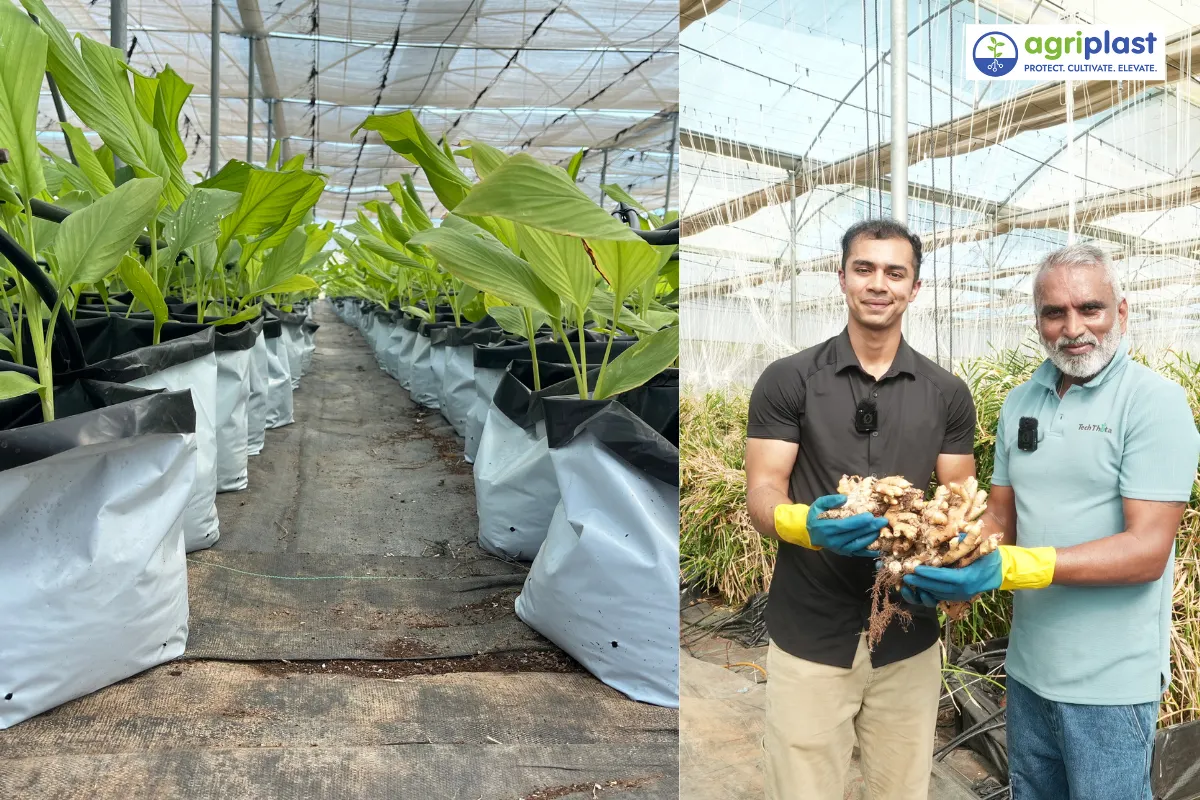
Agriplast Growth Manager Abhinav Visiting Soilless Turmeric & Ginger Farms in India
Another relatively new addition to the polyhouse crop list is turmeric and ginger. Traditionally open-field crops, both have recently shown strong results in soilless systems under protected cultivation, including polyhouses, net houses, and tunnels.
This shift has helped growers:
- Increase production significantly, with yields of up to 2–3 kg per plant in well-managed systems
- Ensure more consistent, year-round supply
- Achieve higher curcumin and gingerol content, which improves market value
Both crops also have the advantage of being relatively hardy, meaning they are less prone to severe pest and disease pressure compared to many vegetable crops. They also offer strong value-addition potential across food, health, and processing industries.
Read Our detailed guide to learn more about Turmeric farming.
However, growers should keep a few important points in mind before starting turmeric or ginger under protected cultivation:
- Do a thorough market study to understand the right buyer, price, and volume requirements
- Develop proper irrigation and fertigation know-how. Since these crops are relatively new in soilless systems, understanding the right nutrient schedules and maintaining correct moisture levels is critical for success.
| Parameter | Turmeric | Ginger |
|---|---|---|
| Crop Cycle | 8–9 months | 8–9 months |
| Ideal Temperature | 15–40°C | 18–35°C |
| Average Yield per Plant | 1.5–2+ kg (wet rhizome) | 1.5–2+ kg |
| Expected Yield | ~40–45 tonnes per acre | 45–60 tonnes per acre |
| Main Buyers | Nutraceutical companies, spice processors, planting material buyers | Nutraceutical companies, processors, fresh markets |
| Selling Price | ₹60–100/kg (fresh) | ₹60–100/kg |
Pro Tip: Before investing in heavy infrastructure, make sure you understand the irrigation and fertigation requirements of the crop, and secure a clear buyer with confirmed demand.
8. Nursery / Young Plant Business
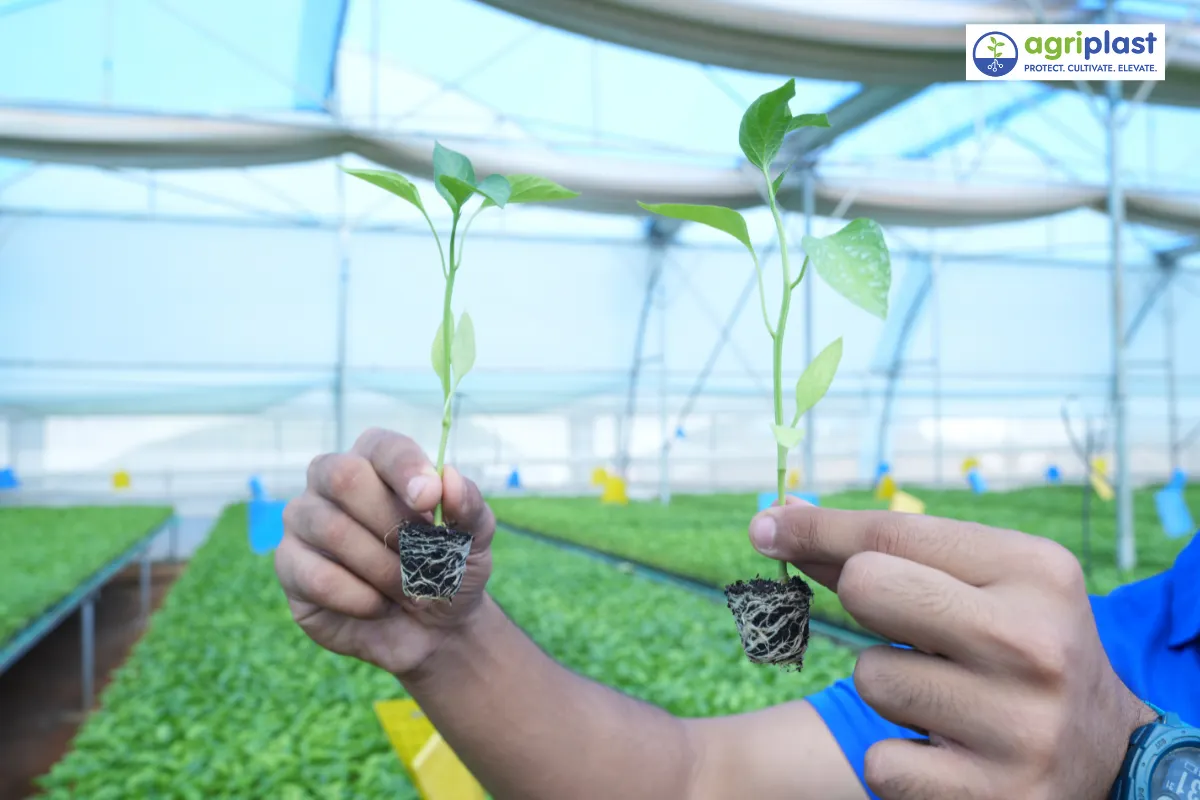
The seedling on the right was grown under Ginegar greenhouse film, while the one on the left was grown under a competitor’s film.
Have you ever wondered where all the seedlings and young plants for these crops actually come from?
Every crop has its own method of propagation. Some are directly sown as seeds, some are multiplied in tissue culture labs, and others are grown through grafting. But most commercial crops depend on high-quality nurseries to supply healthy, uniform seedlings to farmers.
A professional nursery or hardening unit requires very precise growing conditions—especially temperature, humidity, light, and irrigation—at different stages of plant growth. This level of control usually mandates a polyhouse or climate-controlled structure.
The advantage of a nursery business is that the buyer is often pre-defined. Farmers always need seedlings, and good nursery operators can command premium prices based on quality, uniformity, and survival rates.
However, nursery production is not as simple as it looks. It is a precision-driven business, and small mistakes can lead to large-scale losses.
Key risks to consider in the nursery business:
- High sensitivity to errors: Small mistakes in irrigation, humidity, nutrition, or disease control can cause large-scale seedling mortality within days.
- Strict quality expectations: Buyers expect uniform, disease-free, and properly hardened plants. Even minor quality issues can lead to rejected batches.
- Disease outbreaks spread quickly: In dense nursery environments, pests or fungal infections can spread rapidly and wipe out entire trays.
- Dependence on timing: Seedlings must be ready exactly when the farmer needs them. Any delay in sowing or growth can lead to unsold inventory.
- High operational discipline required: Nurseries demand daily monitoring, skilled labor, and strict hygiene protocols.
Pro Tip: Before investing in a polyhouse for a nursery business, visit and speak with at least
10 experienced nursery operators. Understand their challenges, input costs, buyer expectations, and day-to-day operations before making your decision.
9. Ornamental Plants / Potted Plants
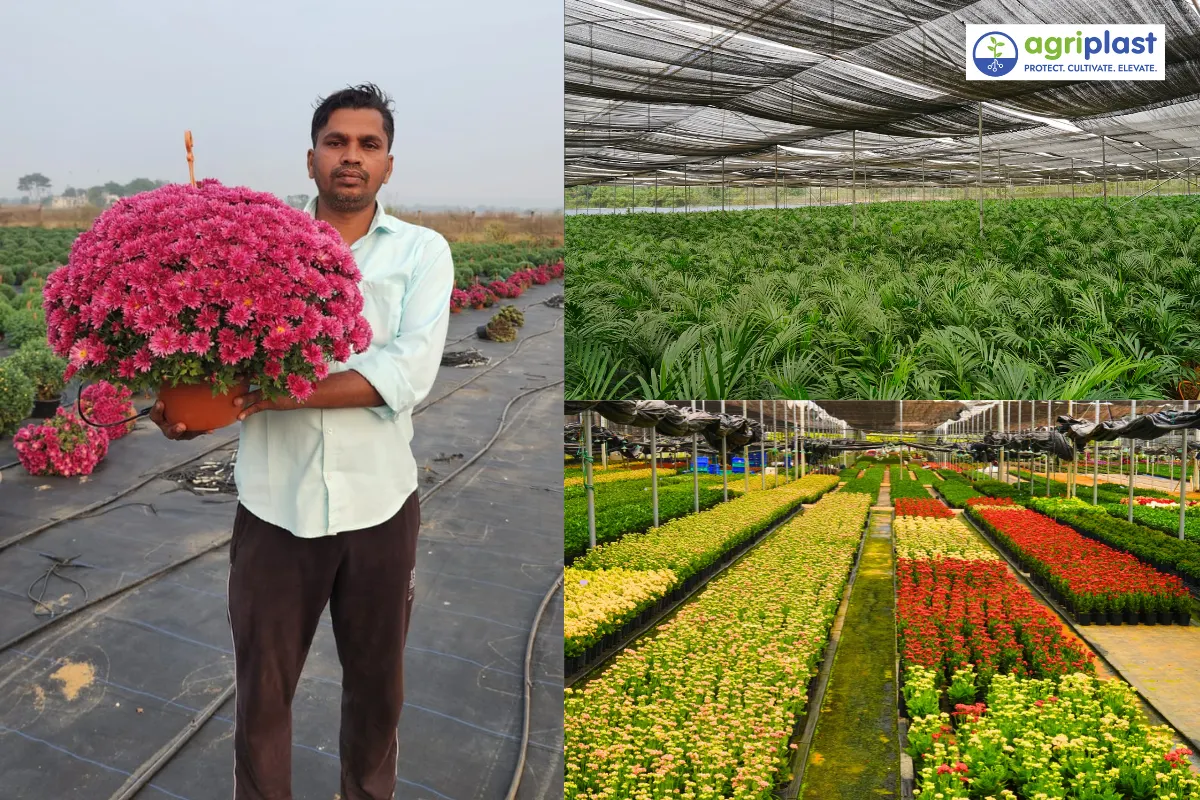
Potted Flowers & Other Ornamental Plants Being Grown in a Polyhouse
Yes, the attractive potted plants you see in homes, offices, and stores usually originate from farmers growing them under protected conditions. Potted flowers and ornamental plants are an important segment of polyhouse crops.
Along with traditional foliage ornamentals, potted flowering plants have also gained strong popularity in India over the past few years.
One of the biggest advantages of potted plants compared to cut flowers is their longer shelf life. Cut flowers typically last only a few days after harvest—roses or carnations may last 6–7 days. Potted plants, on the other hand, can last six months to a year or more. If they don’t sell immediately, the farmer can hold the stock, and in some cases, the price may even improve. This significantly reduces market risk.
Producing high-quality potted plants in open fields is difficult. Rain damage, insect pressure, temperature fluctuations, and higher pesticide use all affect plant quality. That’s why protected structures like polyhouses or shade net houses play a crucial role in this segment.
Agriplast customers such as Florance Flora are among the largest suppliers of potted flowers and plants in India, supplying major retail chains like IKEA.
Another Agriplast farmer, Tarun Mal, using Agriplast Aluminet, has successfully scaled his potted flower business to multi-crore revenues—starting with multi-flora chrysanthemums and now expanding into several new varieties.
10. Herbs — Small Space, High Value
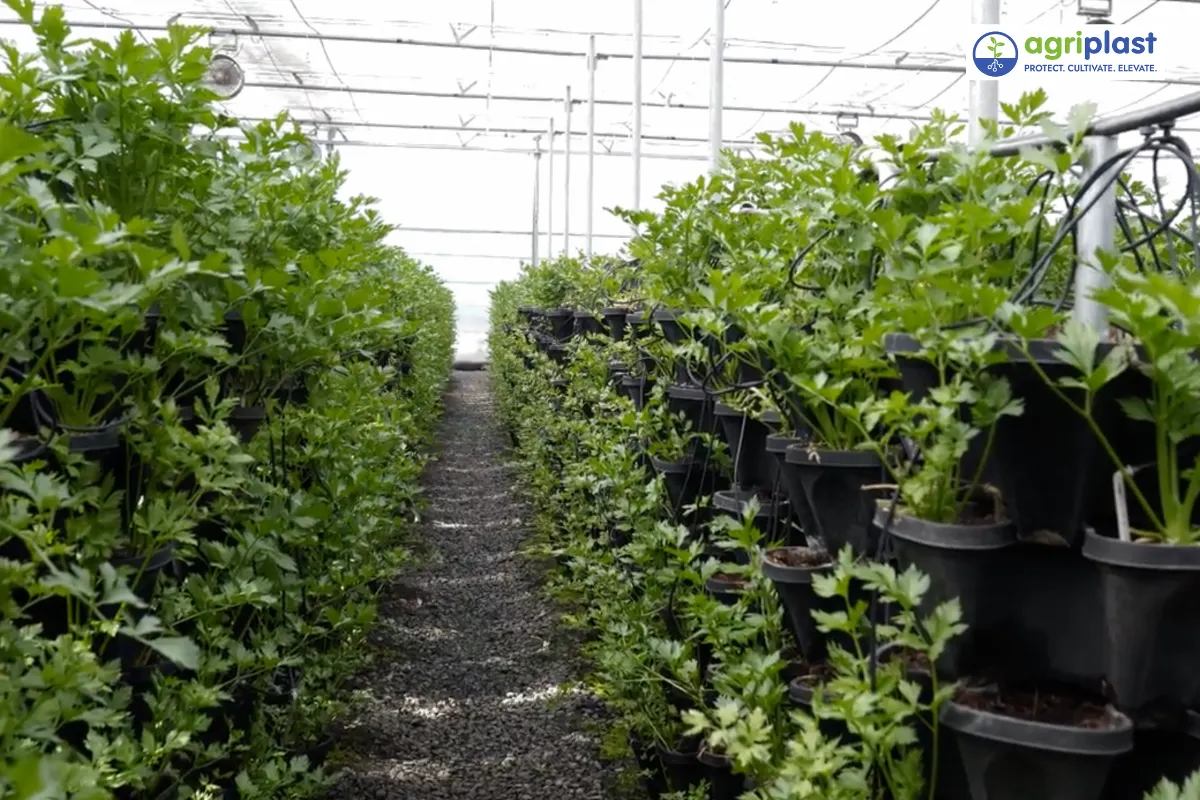
Herbs being Grown under polyhouse at Nutrifresh Farms, Pune, Maharashtra
Herbs are one of the fastest-growing segments in protected cultivation, especially around metro cities. Crops like basil, mint, parsley, rosemary, thyme, and oregano are seeing increasing demand from hotels, restaurants, cloud kitchens, premium grocery stores, and health-conscious consumers.
Unlike traditional field crops, herbs are high-value, low-volume crops. This means you don’t need large land areas to build a viable business. Even a small polyhouse or net house can generate steady income if you have the right buyer.
Most herbs have short crop cycles and can be harvested multiple times, making them suitable for continuous production systems. Many growers follow a staggered planting schedule so that fresh herbs are available for harvest every week.
Herbs can be grown in:
- Soil-based beds inside polyhouses
- Grow bags or soilless troughs
- Hydroponic systems for premium markets
The choice depends on your budget, technical skills, and target buyers.
The biggest advantage of herbs is consistent demand from organized buyers. Hotels, salad brands, and food processors prefer reliable suppliers who can deliver uniform, clean, and pesticide-safe produce.
However, herbs are also a market-driven crop. Unlike tomatoes or cucumbers, you can’t simply take them to the local mandi. Most herb businesses succeed only when growers have pre-identified buyers and a clear supply agreement.
Pro Tip:
Start herbs only after securing a buyer. Even a small polyhouse can become profitable if you have a steady restaurant, retailer, or processing client. Without a market, even high-quality herbs can go unsold.
11. BONUS ( Musk Melon, Vanilla & Eggplant )
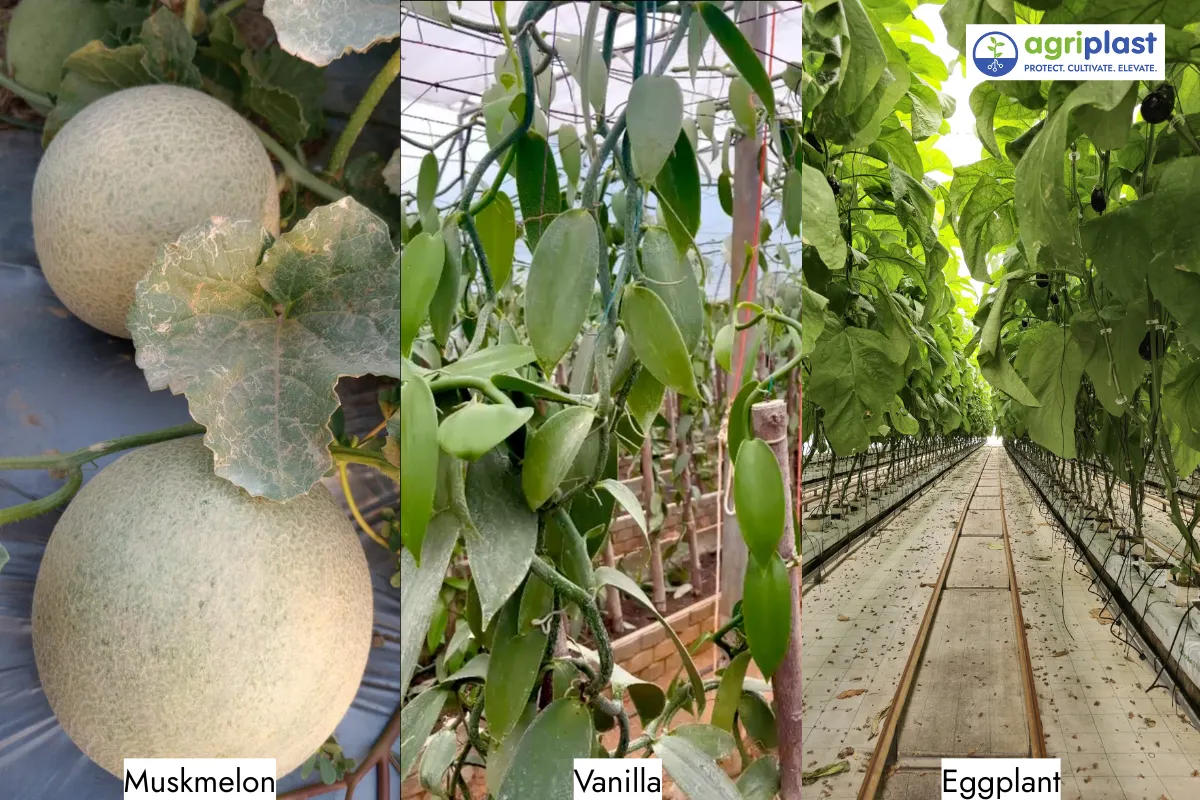
Keeping these at the last because whilst these crops have shown great initial results in a polyhouse, there is yet to be large scale adoption in India primarily owing to:
- Lack of growing knowledge and technical expertise among farmers
- Limited availability of reliable planting material and proven varieties
- Uncertain or niche market demand in many regions
Common Mistakes Farmers Make When Choosing Polyhouse Crops
1. Ignoring market demand and buyer access
Many farmers choose crops based on trends or what others are growing, without confirming who will actually buy the produce and at what price.
2. Not matching the crop to local climate conditions
Every crop has specific temperature, humidity, and light requirements. Choosing a crop unsuitable for your region increases costs and risks.
3. Selecting the right crop but the wrong variety
Cheap or unsuitable varieties often lead to lower yields, poor quality, and weak market acceptance.
4. Using the wrong polyhouse structure or film for the crop
Different crops require different levels of climate control. A mismatch between crop and structure can severely impact productivity.
5. Making decisions based only on blogs or videos
Online content is a good starting point, but nothing replaces on-ground learning—visiting farms, speaking to multiple growers, and consulting experts.
6. Skipping soil and water testing
Poor water quality, high EC, or unsuitable soil can damage crops and reduce yields, even inside a polyhouse.
7. Growing incompatible crops in the same structure
Mixing crops with different climate or humidity requirements can lead to disease, poor growth, and management difficulties.
8. Starting without a clear buyer or market plan
Many high-value crops are not mandi-driven. Without a pre-identified buyer, even good produce may go unsold.
9. Underestimating the technical nature of polyhouse farming
Protected cultivation requires disciplined irrigation, fertigation, pruning, and climate management. It is not a “set-and-forget” system.
10. Overestimating profits and underestimating operational effort
Some farmers invest based on projected returns without understanding the daily management, labour needs, and market risks.
Choosing the right polyhouse crops is the single biggest factor in whether your investment pays off.
Regardless of what you grow, the quality of your polyhouse infrastructure — the right greenhouse film, proper insect nets, appropriate shade solutions, and reliable irrigation — directly impacts your crop quality, yield, and ultimately your profit.
The best time to plan your polyhouse crop strategy is before you build. The second-best time is now. Choose wisely, start small, scale what works — and let the data guide your decisions, not assumptions.
Frequently Asked Questions
Blog written and Posted by
Abhinav Roy
Abhinav Roy is an agribusiness professional, agricultural communicator, and host of AgriTalk by Abhinav Roy. He works closely with farmers, agripreneurs, across India to simplify complex agricultural technologies into practical, field-ready insights. With hands-on exposure to protected cultivation, crop protection systems, and farm economics, Abhinav focuses on bridging the gap between science, sustainability, and scalable farming solutions.You can write your view/comments here
Need Expert Assistance?
Get personalized recommendations for your greenhouse, polyhouse, or irrigation needs.
-
Bengaluru (Corporate Office)
- 918141446666
- support@agriplast.co.in
WeWork Roshni Tech Hub - 1st floor, PFS Club House, Marathahalli Main Rd, R.J.Gardens, Lakshminarayana Pura, EPIP Zone, Chinnapanna Halli, Bengaluru, Karnataka 560037