How Shashwat Mundra Avoided ₹2 Lakh Per Acre Losses in Amravati
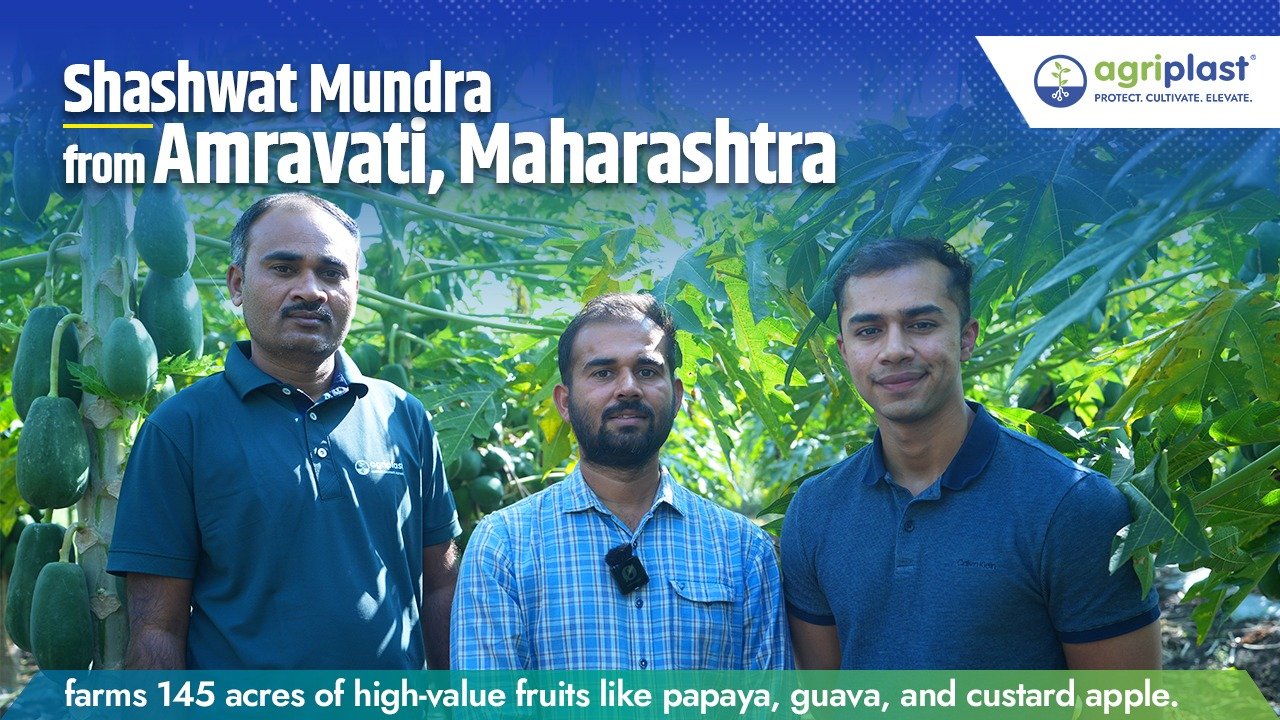
Shashwat Mundra from Amravati, Maharashtra farms 145 acres of high-value fruits like papaya, guava, and custard apple. After 13 years of mulching experience, he discovered that the ₹500 price difference between quality mulch (₹2,500/acre) and cheap mulch (₹2,000/acre) was costing him lakhs in lost yields, weed control failures, and soil degradation.
This is the story of how switching to Agriplast Ginegar quality mulch transformed his 100-acre fruit operation, delivering measurable returns through better root development, weed suppression, and organic matter retention.
Why Plastic Mulching in Agriculture Failed Before Quality Mulch
Before switching to Agriplast 5 years ago, Shashwat experienced inconsistent mulch quality from other brands. Some years the film performed well, but in other seasons it tore prematurely, allowing weeds to overrun the field and causing soil compaction.
The breaking point came when he tried a competitor's cheaper mulch (₹2,000/acre) in his chili crop. The results were devastating:
- Premature tearing: Mulch degraded within 2-3 months instead of lasting the full crop cycle
- Weed explosion: Once the film tore, weed pressure increased rapidly, intercepting water and fertigation
- Soil hardpan: Without mulch protection, heavy rains created hard-packed soil that prevented root penetration
- Poor growth: Chili plants showed stunted development and lower yields
The "savings" of ₹500/acre turned into losses worth lakhs when factoring in reduced yields, wasted organic inputs, and increased labor costs.
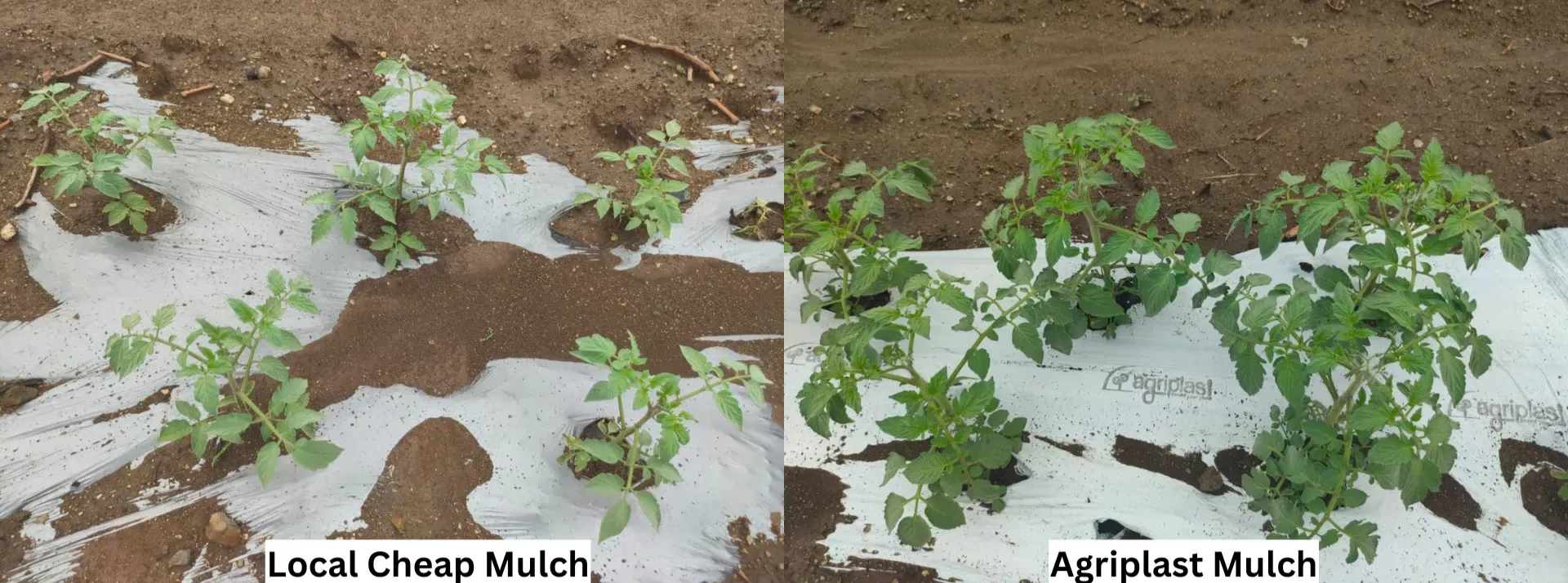
The real cost of cheap mulch: premature tearing allows weed explosion and crop failure
The ₹2,500 vs ₹2,000 Mulch: Economics of Quality
Here's the math that changed Shashwat's approach:
| Cost Factor | Cheap Mulch (₹2,000) | Quality Mulch (₹2,500) |
|---|---|---|
| Material cost | ₹2,000/acre | ₹2,500/acre |
| Labor (same for both) | ₹1,000/acre | ₹1,000/acre |
| Total investment | ₹3,000/acre | ₹3,500/acre |
| Actual difference | ₹500/acre | ₹500/acre |
Studies show that plastic mulching in agriculture can improve crop yields by 15-40% and reduce water usage by 30-50% when quality materials are used consistently. However, these benefits only materialize when the mulch film maintains its integrity throughout the crop cycle.
When Shashwat calculated the real costs, he realized:
- ₹500 price difference = only ₹2,000-3,000 per acre total when labor is the same
- Benefits of quality mulch = massive productivity gains worth lakhs
- Poor quality mulch = false economy that destroys crop potential
The financial risk does not come from the ₹500 price difference, but from mid-season mulch failure which triggers weed resurgence, nutrient loss, and yield penalties that compound across the season.
Erratic Rainfall in Maharashtra: Why Mulching Became Non-Negotiable
Maharashtra's rainfall patterns have shifted dramatically. Instead of 3 months of monsoon, Shashwat now experiences rain almost every month. This creates two major problems for fruit farmers:
Problem 1: Organic Matter Washaway
Shashwat applies 5-10 trolleys of cow dung manure per acre annually. Without mulch protection, heavy rains wash away valuable humus, turning it into brown water flowing off the field. This wastes his organic investment before crops can benefit.
Problem 2: Premature Fruit Drop
Erratic rainfall causes papaya, custard apple, and guava to ripen and fall during cloudy weather when market demand is at its lowest. This timing mismatch results in poor prices and revenue loss.
Quality mulch creates a protective barrier that retains organic matter in the root zone and stabilizes soil moisture, preventing stress-induced fruit drop.
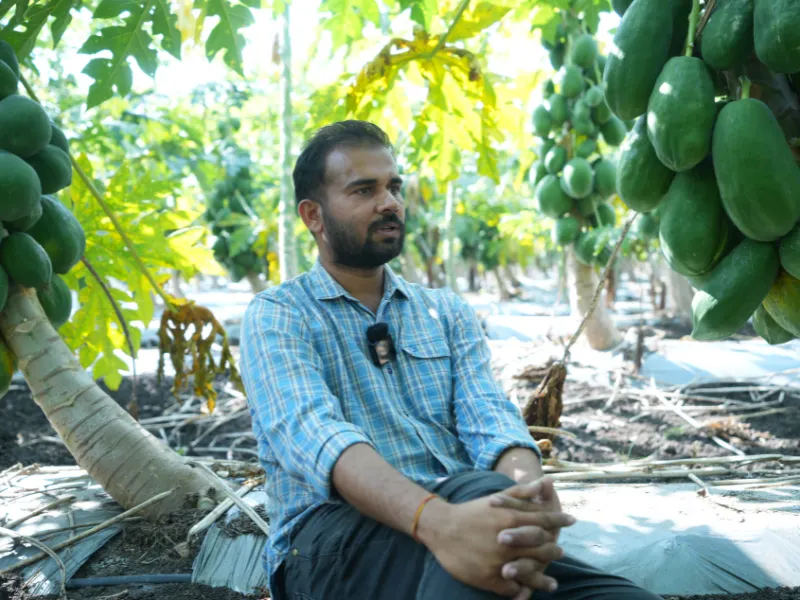
Quality Agriplast mulch protects 5-10 trolleys of organic manure from monsoon washaway
How Agriplast Mulch Solves Plastic Mulching in Agriculture Challenges
After switching to Agriplast's UV-stabilized mulch film, Shashwat observed three game-changing improvements:
1. Surface Root Development in Custard Apple
With Agriplast mulch, he can now see surface root networks in custard apple trees—something he never witnessed before. The mulch creates an artificial "night environment" by blocking light, encouraging roots to grow upward near the nutrient-rich topsoil layer.
This surface root development improves:
- Nutrient uptake efficiency
- Water absorption during fertigation
- Overall tree vigor and fruit quality
2. 24/7 Bacterial Activity
Quality mulch maintains optimal soil temperature and moisture conditions, allowing beneficial soil bacteria to remain active day and night. This continuous biological activity improves:
- Organic matter decomposition
- Nutrient availability
- Soil structure and porosity
Research confirms that mulching in agriculture promotes beneficial microbial activity, leading to better soil health and improved nutrient cycling over time.
3. Weed-Fertilizer Competition Eliminated
Fruit trees like papaya, guava, and custard apple are deep-rooted. Weeds are shallow-rooted. Without mulch, weeds intercept all the fertigation before it reaches the target plants.
Labor costs for manual weeding have become prohibitively expensive in Maharashtra. Agriplast mulch provides:
- Zero light transmission for complete weed suppression
- Barrier protection that lasts the entire crop cycle
- Cost savings on manual labor and herbicides
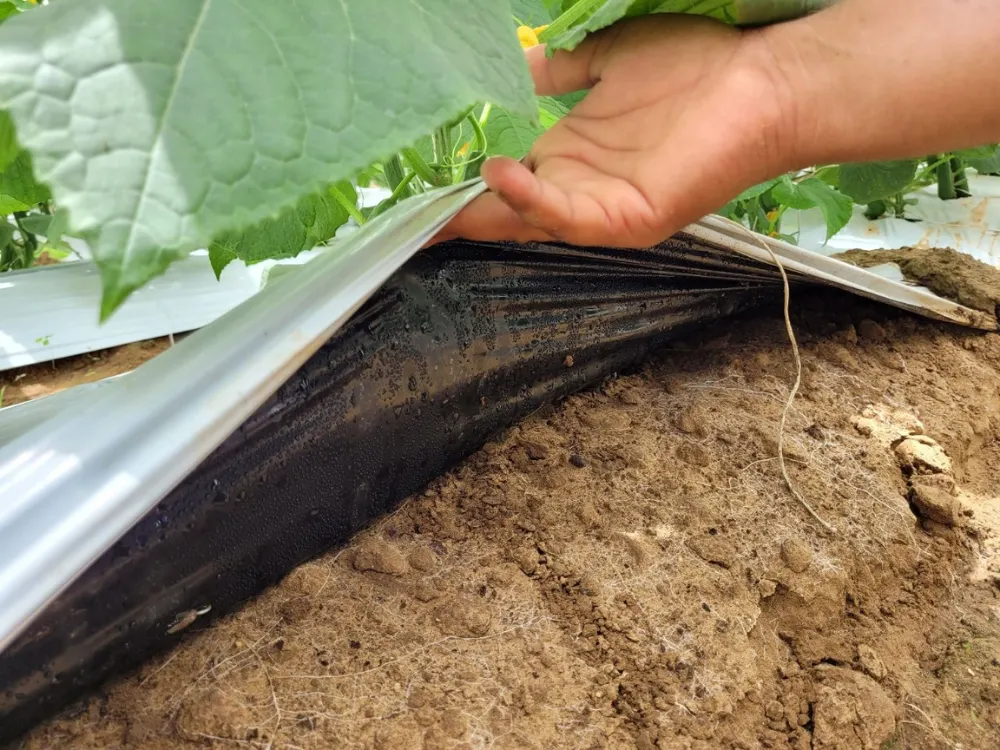
Surface root networks visible in crop—never seen before using Agriplast mulch
Plastic Mulching in Agriculture Results: Shashwat's Transformation
After 5 years with Agriplast mulch, Shashwat reports consistent quality and performance:
Quantifiable Benefits:
- Durability: Mulch withstands heavy foot traffic throughout the crop cycle without tearing
- Soil protection: No hardpan formation even after heavy rains
- Organic retention: All 5-10 trolleys of cow dung manure remain in the root zone instead of washing away
- Labor savings: Zero weeding cost compared to expensive manual removal
- Root quality: Visible surface root networks indicating optimal growing conditions
ROI Calculation:
- Additional cost: ₹500/acre over cheap alternatives
- Savings from weed control: ₹5,000-8,000/acre in labor
- Value of retained organic matter: ₹3,000-5,000/acre
- Yield improvement: 15-25% in fruit quality and quantity
- Net benefit: ₹20,000-40,000/acre annually
The additional ₹500 per acre investment was recovered multiple times over through avoided weeding costs, protected organic inputs, and more stable yields.
🎥 Watch: Shashwat Mundra Explains the Real Cost of Cheap Mulch
Hear directly from Shashwat as he sits down to share his 13-year mulching journey — why the ₹500 difference between ₹2,500 quality mulch and ₹2,000 cheap mulch turned into lakhs in savings, from root development you can actually see to organic matter that stays where you put it.
Common Plastic Mulching in Agriculture Mistakes: What Shashwat Learned
Through 13 years of mulching experience, Shashwat identified critical mistakes farmers make:
Mistake 1: Chasing the Lowest Price
Cheap mulch at ₹2,000/acre seems attractive, but:
- Tears within 2-3 months
- Allows weed growth
- Creates soil compaction
- Total loss exceeds ₹500 savings
Mistake 2: Ignoring UV Stabilization
Non-UV-stabilized mulch degrades rapidly in Maharashtra's intense sunlight. Quality mulch from manufacturers like Agriplast includes UV protection that extends lifespan from 6 months to 9+ months.
Mistake 3: Not Considering Climate Patterns
With monthly rainfall now common, farmers need mulch that can withstand:
- Heavy downpours without tearing
- Continuous wet-dry cycles
- Temperature fluctuations
Mistake 4: Overlooking Organic Investment Protection
When cow dung manure costs ₹3,000-5,000/trolley and farmers apply 5-10 trolleys/acre, protecting this investment becomes critical. Quality mulch prevents washaway worth lakhs.
Is Plastic Mulching in Agriculture Right for Your Fruit Farm?
Based on Shashwat's 13-year experience, mulching delivers maximum benefit when:
✅ You grow high-value crops (fruits, vegetables) where yield and quality directly impact revenue
✅ You invest in organic inputs (FYM, compost) that need protection from washaway
✅ Your area experiences erratic rainfall or extended rainy seasons
✅ Manual weeding labor is expensive or unavailable
✅ You face competition from weeds for irrigation water and nutrients
When to choose quality mulch over cheap alternatives:
- Crop cycle exceeds 4-6 months (like fruit trees)
- Heavy foot traffic expected during crop management
- High organic matter investment needs protection
- Climate includes both heavy rains and intense sun
- You want predictable, consistent results year after year
Choosing Quality Mulch: Technical Specifications
When selecting plastic mulching in agriculture products, look for these critical features that Shashwat uses:
| Specification | Importance | What to Look For |
|---|---|---|
| UV Stabilization | Critical | Minimum 9-month warranty against UV degradation |
| Thickness | Important | 25-30 micron for vegetables, 100 micron for orchards |
| Light Transmission | Essential | Zero light transmission for complete weed control |
| Embossing | Beneficial | Prevents water pooling, improves durability |
| Width | Practical | Match to row spacing (1-1.5m standard) |
Agriplast offers embossed mulch film with zero light transmission and extended UV protection, specifically designed for Indian farming conditions. These specifications aren't marketing features—they're the technical requirements that determine whether your mulch investment succeeds or fails.
Plastic Mulching in Agriculture: Long-Term Soil Benefits
Beyond immediate weed control and moisture retention, quality mulching provides compounding benefits over time:
Soil Temperature Regulation
Mulch moderates soil temperature fluctuations, protecting beneficial microorganisms and root systems from thermal stress. Studies show mulched soil maintains 2-5°C cooler temperatures during peak summer compared to bare soil.
Improved Soil Structure
By preventing raindrop impact and erosion, mulch preserves soil aggregates and prevents crust formation. This allows better:
- Air circulation to roots
- Water infiltration
- Nutrient movement
Enhanced Nutrient Cycling
The "artificial night environment" created by mulch encourages surface root development, improving nutrient uptake efficiency. Combined with protected organic matter, this creates a positive feedback loop of soil improvement.
Conclusion: The Real Cost of Cheap Mulch
Shashwat's 13-year mulching journey reveals a fundamental truth: the ₹500 price difference between quality and cheap mulch is irrelevant when measured against the real costs of crop failure.
Quality mulch from trusted manufacturers like Agriplast Tech India delivers:
- Season-long durability even with heavy use
- Complete weed suppression through zero light transmission
- Protection for valuable organic matter investments
- Measurable ROI through reduced labor and improved yields
For fruit farmers in Maharashtra and across India facing climate change challenges, investing ₹500 more per acre in quality mulch isn't an expense—it's the foundation of sustainable, profitable farming.
Want to replicate Shashwat's success? Connect with Agriplast's mulching experts to select the right film thickness and specifications for your crop and climate. The small investment in quality mulch today prevents lakhs in losses tomorrow.
Blog written and Posted by
Abhinav Roy
Abhinav Roy is an agribusiness professional, agricultural communicator, and host of AgriTalk by Abhinav Roy. He works closely with farmers, agripreneurs, across India to simplify complex agricultural technologies into practical, field-ready insights. With hands-on exposure to protected cultivation, crop protection systems, and farm economics, Abhinav focuses on bridging the gap between science, sustainability, and scalable farming solutions.You can write your view/comments here
Need Expert Assistance?
Get personalized recommendations for your greenhouse, polyhouse, or irrigation needs.
-
Bengaluru (Corporate Office)
- 918141446666
- support@agriplast.co.in
WeWork Roshni Tech Hub - 1st floor, PFS Club House, Marathahalli Main Rd, R.J.Gardens, Lakshminarayana Pura, EPIP Zone, Chinnapanna Halli, Bengaluru, Karnataka 560037