Shade Net Guide: Types, Colours, Percentages & How to Choose the Right One
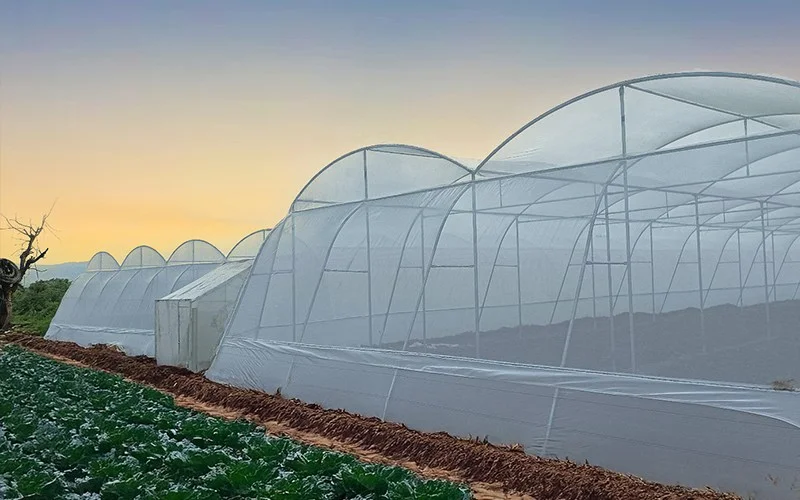
Summer temperatures crossing 45°C have made crop losses from heat stress a serious concern for Indian farmers. Seedlings wilt within hours. Flowering drops. Fruit develops sunburn. For progressive farmers, polyhouse growers, and nursery owners, the shade net has emerged as one of the most practical solutions to protect crops from extreme weather.
Shade nets look simple, but choosing the wrong one can cost you an entire season. With multiple colours and shade percentages flooding the market, many farmers end up installing nets that block too much light, trap excess heat, or stress plants leading to poor growth, delayed flowering, and lower yields.
This guide covers everything you need to select the right shade net for Indian farming conditions.

Vegetable seedlings grown under green shade net inside a protected nursery structure for temperature control and uniform growth
What is a Shade Net and How Does It Work?
A shade net is a woven or knitted HDPE (high-density polyethylene) fabric that filters sunlight, reduces temperature, and creates a controlled microclimate for crops. Unlike solid covers, shade nets allow air circulation while blocking a specific percentage of solar radiation.
When sunlight hits a shade net, part gets blocked, part passes through, and a small portion scatters. The percentage blocked depends on the shade factor—a 50% shade net blocks half the incoming light while allowing the rest to reach your crops.
Three Ways Shade Nets Protect Your Crops
- Light Intensity Reduction: Most vegetables need only 30,000-50,000 lux for optimal photosynthesis. Indian summer sun delivers 80,000-120,000 lux—far more than plants can handle efficiently. Excess light causes leaf burn, chlorophyll degradation, and photosynthesis shutdown. Shade nets bring intensity down to usable levels.
- Temperature Control: Shade nets lower canopy temperature by 3-5°C compared to open field conditions. This prevents heat stress that causes flower drop in tomatoes, fruit abortion in capsicum, and wilting in seedlings. The temperature difference can mean the difference between a successful crop and total loss during May-June.
- Reduced Water Loss: Lower temperatures and filtered light reduce evapotranspiration. Your crops lose less water, soil stays moist longer, and irrigation frequency drops. For farmers in water-scarce regions, this translates directly to lower input costs.
For farmers growing off-season vegetables or high-value floriculture, the shade net has become essential infrastructure—not a luxury, but a necessity for profitable cultivation.
Types of Shade Nets by Construction
Understanding construction types helps you match durability expectations to your investment timeline.
Monofilament Shade Nets
Monofilament shade nets use single-thread HDPE fibres woven or knitted together. The individual threads are thicker and stronger, giving excellent tear resistance.
Specifications: 100-125 GSM | 3-5 years UV-stabilized life
Best for: Permanent shade houses, fruit orchards (grape, pomegranate, citrus), high-wind coastal areas, structures that won't be dismantled seasonally
Advantages: Superior tear resistance, uniform shade distribution, handles monsoon winds better, longer lifespan reduces replacement hassle
Trade-off: Higher upfront cost. But calculate cost over lifespan—monofilament often proves more economical for permanent installations.

Monofilament nets offer superior tear resistance and 4–5 years lifespan under Indian conditions.
Tape-Type Shade Nets
Tape-type shade nets use flat, ribbon-like HDPE strips woven together. They're lighter, more flexible, and easier to handle during installation.
Specifications: 50-90 GSM | 2-4 years UV-stabilized life
Best for: Seasonal vegetable cultivation, temporary nurseries, structures that need frequent assembly/disassembly, budget-conscious farmers.
Advantages: Lower cost, lightweight for easy handling, good performance for seasonal applications, easier to cut and join.
Trade-off: Lower wind resistance, may not survive rough handling, shorter replacement cycle.

Tape-type nets are lighter and more economical—ideal for seasonal vegetable cultivation.
Knitted vs. Woven Construction
Beyond thread type, shade nets come in knitted or woven construction.
Knitted nets have interlocking loops that provide stretch and flexibility. Critical advantage: if you cut them, they won't unravel. The knit structure absorbs impact and stress without propagating tears.
Woven nets have threads crossing over and under in a grid pattern. They offer more rigidity but may fray if cut or torn.
For most Indian agricultural applications, knitted construction is preferred—it resists tearing better and handles installation stress and wind exposure more effectively.
Shade Net Colours: Quick Selection Guide
Different colours don't just look different—they filter light in ways that affect plant growth. Here's what each colour does:
| Colour | What It Does | Best For |
|---|---|---|
| Green | Balanced spectrum, mimics natural canopy shade | General vegetables, nurseries, mixed crops |
| Black | Pure shade, absorbs all wavelengths equally | Budget applications, construction, parking |
| White | Reflects heat, diffuses light evenly | Heat-sensitive crops, floriculture |
| Aluminet (Silver) | Reflects 50-80% radiation, cools in summer, retains warmth in winter | High-value crops, year-round climate control |
| Red/Yellow | Increases red light, boosts vegetative growth | Yield optimization (15-40% increase in bell peppers) |
| Blue | Enriches blue light, produces compact plants | Controlled height, quality improvement |

Green 50% shade nets provide balanced light filtration—the most versatile choice for Indian vegetable farming.
White and Aluminet are ideal for extreme heat (Gujarat, Rajasthan, Telangana) where cooling matters more than cost.

Aluminet reflects 50-80% radiation—ideal for extreme heat zones like Gujarat, Rajasthan, and Telangana.
Chromatic nets (red, blue, yellow) are emerging technologies for farmers targeting specific growth responses.
Want to understand the science behind colour selection? Read our detailed guide: How Shade Net Colours Affect Plant Growth: The Light Spectrum Science
Shade Percentage Guide: Match the Right Level to Your Crop
The shade percentage indicates how much sunlight the net blocks. Getting this right is critical—too much shade starves plants of energy, too little fails to provide adequate protection.
35% Shade — High-Light Crops
Tomato, capsicum, brinjal, chilli, and cucumber need substantial sunlight for photosynthesis and fruit development. Under Indian summer conditions, 35% shading reduces stress without significantly limiting growth.
Recommended for:
- Fruit vegetables in polyhouse cultivation
- Grape vineyards needing light sunburn protection
- Ceiling netting inside fan-pad greenhouses
- Crops where flowering and fruiting are primary goals
Agriplast has observed that tomatoes perform better under 35% shade compared to higher percentages that can delay fruiting and reduce fruit count.
50% Shade — The Standard Choice
Half-shade is the most widely used percentage in Indian agriculture. It provides balanced protection suitable for diverse applications.
Recommended for:
- Vegetable nurseries (tomato, capsicum, brinjal seedlings)
- Leafy greens (spinach, lettuce, coriander, methi, palak)
- General horticulture and mixed cropping
- Hardening of seedlings before field transplant
- Terrace gardens and home cultivation
Safe default for most farmers starting with shade net cultivation. When in doubt, 50% rarely goes wrong.
75% Shade — Shade-Loving Plants
Some crops naturally grow under forest canopies and require limited direct light.
Recommended for:
- Orchids, ferns, anthuriums, philodendrons
- Certain medicinal plants (ashwagandha seedlings, brahmi)
- Tissue-cultured plantlets during acclimatization
- Ginger and turmeric in initial growth stages
- Betel vine (paan) cultivation
Agriplast has observed that shade percentages above 75% reduce flowering in many crops—be cautious with vegetables and flowering ornamentals at this level.
90% Shade — Extreme Light Protection
Reserved for specific situations requiring maximum light reduction.
Recommended for:
- Initial hardening of very sensitive tissue culture plantlets
- Extreme summer protection for shade-loving ornamentals
- Non-agricultural: parking shade, terrace cooling, boundary fencing
Too dark for most food crops. Plants struggle to photosynthesize adequately, growth slows dramatically, and flowering is severely affected. Use only when you specifically need near-complete light blocking.
How to Choose the Right Shade Net: 4-Step Decision Framework
Step 1: Identify Crop Light Requirements
Start with what your specific crop needs:
Based on Daily Light Integral (DLI) science—the amount of photosynthetic light crops receive per day. Indian summer delivers 50-60 DLI, far more than most crops need. Read the full science behind shade percentage selection.
DLI data based on research from Michigan State University, Purdue University, and international greenhouse studies.

Infographic showing DLI-based shade net percentage selection for Indian crops including tomato, capsicum, cucumber, and nursery seedlings.
Step 2: Assess Your Climate Zone
Your location dramatically affects selection:
Extreme heat zones (Gujarat, Rajasthan, Telangana, Vidarbha): Temperatures regularly exceed 42°C. Prioritize heat reflection: white or aluminet. Cooling benefit justifies premium cost.
Moderate climate (Coastal Karnataka, Kerala, Tamil Nadu plains): Green or black nets typically sufficient. Focus on rain/wind protection during monsoon.
Winter cultivation (North India, highland areas): Black nets retain slight warmth. Aluminet provides thermal barrier for cold nights.
High-wind/monsoon-prone areas: Invest in monofilament construction. Higher GSM (100+) for wind resistance. Reinforced edges essential.
Step 3: Check Material Quality Specifications
Quality differences affect both performance and lifespan:
UV stabilization: Non-negotiable. Without proper UV treatment, HDPE becomes brittle within months under Indian sun. Look for minimum 3-year rated life. Premium nets offer 5+ years.
GSM (grams per square meter): 60-90 GSM: Standard tape-type for seasonal use. 100-135 GSM: Heavy-duty monofilament for permanent structures. Higher GSM = stronger, more durable, better wind resistance.
BIS certification: IS 16008 (Part 1 for tape, Part 2 for monofilament) ensures minimum quality standards for UV resistance, tensile strength, and shade accuracy. Ask suppliers for certification.
Step 4: Calculate True Cost (Not Just Price)
Compare cost per square meter per year, not upfront price alone.
Example calculation:
- Net A: ₹18/sqm, lasts 2 years = ₹9/sqm/year
- Net B: ₹25/sqm, lasts 5 years = ₹5/sqm/year
Net B costs ~39% more upfront but delivers ~44% lower annual cost—plus you avoid two replacement cycles worth of labour and crop disruption.
Include in budget:
- Installation hardware (ropes, clips, wires)
- Edge reinforcement if not included
- Support structure if building new
- Labour for installation

Black shade nets absorb all wavelengths equally—often used for budget applications and parking shade.
What is GSM and Why Does It Matter?
GSM (grams per square meter) indicates material density. Higher GSM means stronger, more durable nets.
| GSM Range | Type | Expected Life |
|---|---|---|
| 50-70 | Light-duty tape | 1-2 years |
| 80-100 | Standard agricultural | 2-3 years |
| 100-135 | Heavy-duty monofilament | 4-5+ years |
GSM and shade percentage are independent—a 50% net can be 60 GSM or 100 GSM. Both block the same light, but the heavier one lasts longer.
Shade Net Installation Tips for Maximum Lifespan
Proper installation can double your shade net's effective life. Poor installation causes premature failure regardless of net quality.
Tensioning: The Goldilocks Principle
Stretch tight enough to prevent sagging, but leave slight give for wind absorption.
Overtensioning is a common mistake. Nets pulled drum-tight tear at fixing points during wind gusts because there's no slack to absorb sudden loads. The fabric itself may be strong, but concentrated stress at attachment points causes failure.
Undertensioning creates sagging where rainwater pools. Pooled water adds weight (1 litre = 1 kg), stretches fabric unevenly, and accelerates UV degradation in constantly wet areas.
The sweet spot: Net should be taut but have slight give when pressed. It should vibrate slightly in wind rather than staying rigid.
Slope for Drainage
Install with 5-10% slope toward drainage points. Water should sheet off, not collect. Even small pools become problems—they stretch fabric, add weight during monsoon, and create humid microenvironments that can promote fungal issues in crops below.
Hardware Matters
Ropes: Use UV-stabilized polypropylene (PP) or polyethylene (PE) ropes. Standard cotton or jute ropes degrade within months, failing before your net does. Match rope quality to net quality.
Clips: Plastic shade net clips grip securely without cutting into fabric. Metal clips and wires can cut through HDPE over time, especially at stress points. If you must use wire, wrap it with protective material at contact points.
Edge reinforcement: Edges bear maximum installation stress and wind load. If your net doesn't have reinforced borders with rope channels or eyelets, add border tape before installation. This single step can extend life by 1-2 years.
Agriplast has observed that proper tensioning and installation significantly extends shade net life under Indian conditions—often adding 30-50% to effective lifespan.

White shade net installation close-up showing proper tensioning clips and edge reinforcement on polyhouse structure
Maintenance Essentials
Regular maintenance extends life and maintains performance:
Cleaning (every 3-6 months): Dust, pollen, and pesticide residue accumulate on nets, reducing light transmission and adding weight. Use water spray for routine cleaning. For stubborn buildup, mild soap and soft brush work without damaging fabric. Avoid pressure washers—they can strip UV stabilizers.
Inspection (twice yearly): Check before summer (when you need maximum performance) and after monsoon (when wind/rain may have caused damage). Look for tears, loose edges, degraded stitching, and failing hardware. Small tears spread rapidly if ignored—repair early with UV-stabilized patch material.
Seasonal storage: If you remove nets seasonally, ensure they're completely dry before folding. Moisture promotes fungal growth and accelerates degradation. Store loosely folded in cool, dark, dry locations. Even UV-stabilized material degrades faster under continuous sun exposure.
Government Subsidies (2025-26)
Under MIDH (Mission for Integrated Development of Horticulture):
NHB subsidy: Up to 50% on project costs (max ₹56 lakh)
State top-ups: Additional 15-35% depending on state
Enhanced rates: SC/ST farmers and hilly areas get higher percentages
Requirements: Land documents, Aadhaar, bank details, MIDH-compliant project report, BIS-approved materials.
Contact your district horticulture office for current rates and application procedures.
Conclusion
Choosing the right shade net means matching your crop, climate, and budget to the right combination of construction type, colour, and shade percentage.
Quick decision guide:
- Monofilament for durability, tape-type for economy
- Green for balanced shading, white/aluminet for cooling
- 35-50% for vegetables, 75% for shade-lovers
- Check GSM and UV stabilization, not just price
For crop-specific guidance, explore Agriplast's shade net solutions or speak with our technical team.
FAQs
Blog written and Posted by
Abhinav Roy
Abhinav Roy is an agribusiness professional, agricultural communicator, and host of AgriTalk by Abhinav Roy. He works closely with farmers, agripreneurs, across India to simplify complex agricultural technologies into practical, field-ready insights. With hands-on exposure to protected cultivation, crop protection systems, and farm economics, Abhinav focuses on bridging the gap between science, sustainability, and scalable farming solutions.You can write your view/comments here
Need Expert Assistance?
Get personalized recommendations for your greenhouse, polyhouse, or irrigation needs.
-
Bengaluru (Corporate Office)
- 918141446666
- support@agriplast.co.in
WeWork Roshni Tech Hub - 1st floor, PFS Club House, Marathahalli Main Rd, R.J.Gardens, Lakshminarayana Pura, EPIP Zone, Chinnapanna Halli, Bengaluru, Karnataka 560037