How to Choose the Right Agriculture Mulching Paper
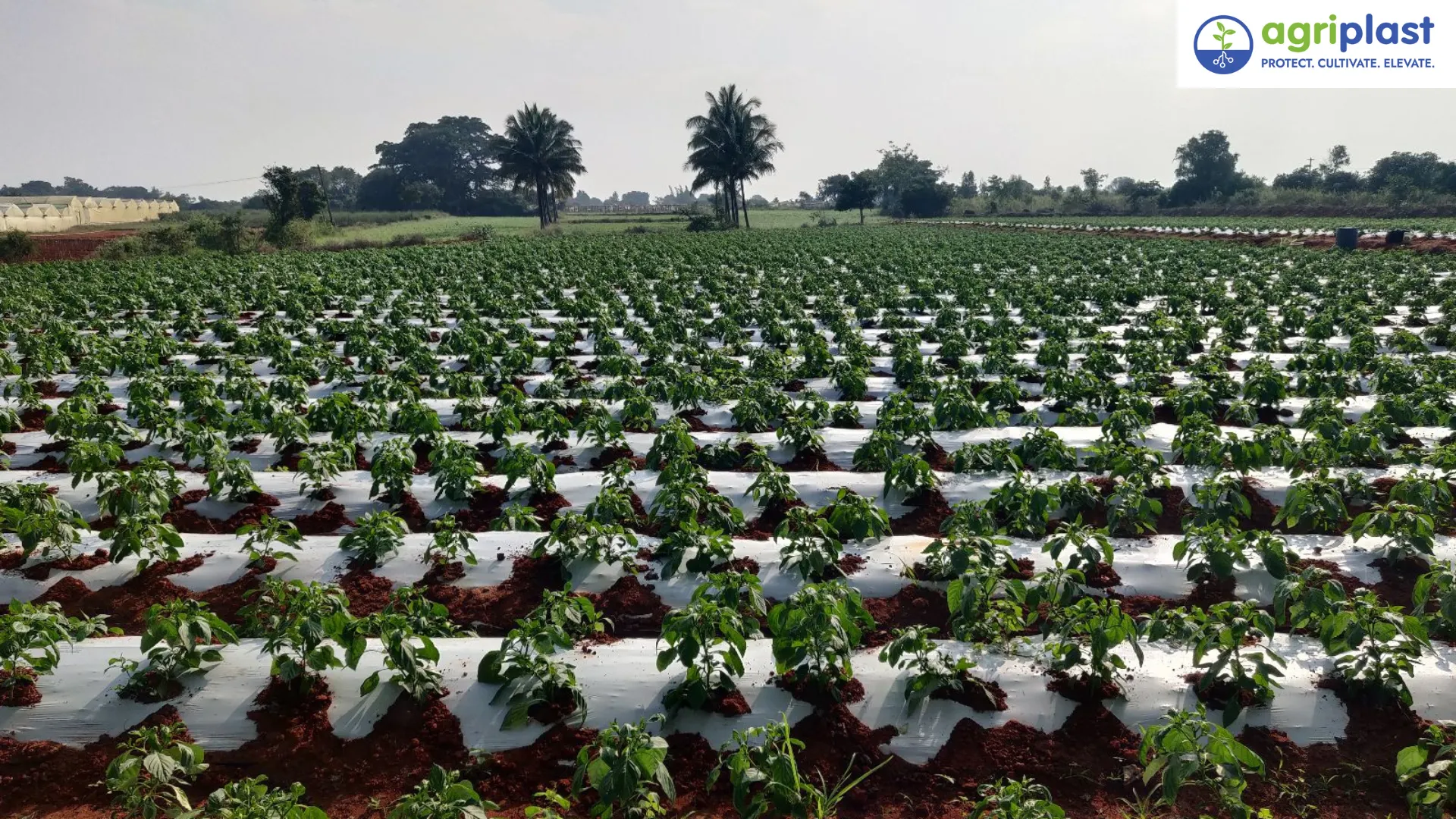
Mulching paper, also commonly searched as mulching sheet or plastic mulching sheet, is a soil-covering material widely used in Indian agriculture to control weeds, retain moisture, regulate soil temperature, and improve crop yield.
Today, farmers and gardeners use different types of agriculture mulching paper—including black plastic mulch, silver-black mulch, and biodegradable mulch—depending on crop type, climate, and budget.
With rising input costs, one of the most common questions farmers ask is: What is the mulching paper price, and which mulching sheet gives the best return?
This guide explains types of mulching paper, mulching sheet with holes vs without holes, plastic mulching sheet benefits, and current mulching paper price factors, so you can choose the right solution for your farm or garden.

Agriplast plastic mulching sheets used in Indian vegetable farming with drip irrigation
Why Mulching Is Non‑Negotiable for Modern Farming
The use of mulching paper (also called mulching sheet or plastic mulching sheet) delivers multiple agronomic and economic benefits for both gardens and commercial farms:
- Moisture conservation: Mulching paper significantly reduces surface evaporation, allowing soil to retain moisture for longer periods and reducing irrigation frequency.
- Effective weed control: By blocking sunlight from reaching the soil, mulching paper suppresses weed germination and growth, reducing labour and herbicide costs.
- Soil temperature regulation: Mulching paper helps maintain stable soil temperatures—protecting roots from heat stress in summer and cold stress during cooler periods.
- Improved soil health (organic options): Organic and biodegradable mulching papers gradually decompose, adding organic matter to the soil and supporting long-term soil health.

Field comparison showing weed suppression performance of Agriplast mulching sheets
How to Choose the Right Mulching Sheet Colour
Choosing the right mulching sheet colour is critical. The wrong colour can overheat the root zone, stress plants, and reduce yield—especially in Indian climates where soil temperature varies sharply by region and season.
Agriplast mulching sheets are designed with zero light transmission and climate-specific colour options to help farmers manage soil temperature, weed pressure, and crop health more precisely. Two of the most commonly used mulch colours in India are:
Silver-Black Mulching Sheet (Best for Hot & High-Radiation Regions)
- Silver side faces up: Reflects excess sunlight and reduces soil overheating.
- Black side faces down: Blocks light completely to prevent weed growth.
Best suited for:
- Summer planting
- High-radiation zones
- Regions with temperatures above 30–35°C
Thickness Guide: 25 vs. 50 vs. 100 Microns
The thickness of your mulching film (measured in microns) dictates its lifespan. Using a thin film for a long-term crop will lead to tearing and degradation before harvest.
| Crop Duration | Recommended Thickness | Examples |
|---|---|---|
| Short term (3–4 months) | 25–30 microns | Vegetables like lettuce, leafy greens |
| Medium term (9–11 months) | 50 microns | Solanaceous crops (tomato, brinjal, chilli) |
| Long term (multi-year) | 100 microns | Orchards (pomegranate, citrus, papaya) |

Different mulching sheet colours used across Indian climate zones
Choosing the Right Agriculture Mulching Paper
Not all mulching sheets are truly opaque. Low-quality films may look black but still allow light to pass through, which triggers weed growth under the mulch. As weeds push upward, they tear the film and compete with crops for nutrition, impacting plant health and output.
Simple Torch Test:
Shine a torch behind the mulch in a dark room. If light passes through, the sheet has poor opacity and weak weed control. High-quality mulching sheets must provide zero light transmission.
Why Darkness Improves Roots & Soil Health
Roots naturally grow towards darkness, which signals deeper, safer soil. When light is blocked:
- Healthier root systems: White, healthier roots develop in consistently dark conditions.
- Stable microclimate: Moisture and temperature remain stable under the mulch.
- Beneficial microbes thrive: Soil microbes flourish in the dark, moist root zone.
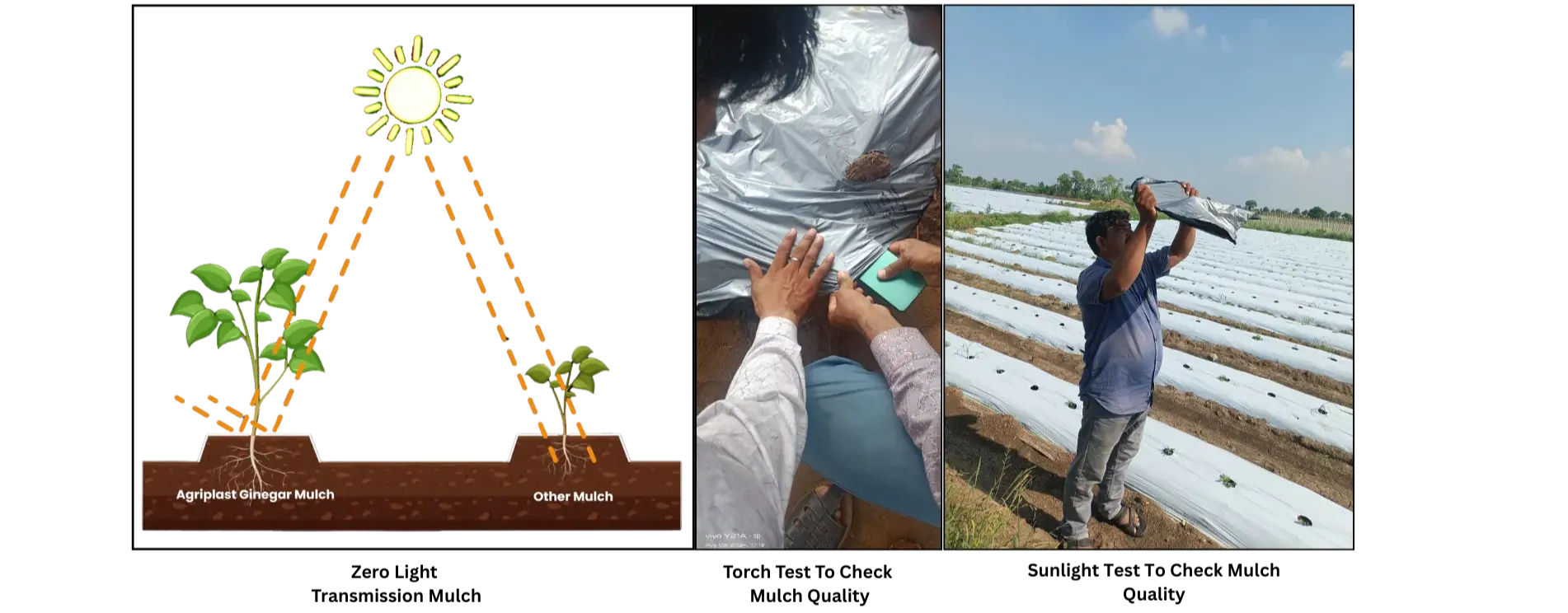
Torch test showing zero light transmission in Agriplast mulching sheets
Best Mulch Installation Practices
Even the best mulching sheet will fail if installed incorrectly. Follow these best practices to ensure durability and performance:
- Bed Preparation: Prepare smooth, well-shaped beds and remove sharp stones to prevent punctures.
- Drip Line Placement: Install and test drip laterals before laying the mulching sheet to avoid rework and damage.
- Tight Laying: Lay the mulch firmly against the soil. Loose mulch flaps in wind, causing friction, tearing, and stem damage.
- Secure Edges: Bury the edges completely with soil to prevent wind lift and moisture loss.
- Pre-Punched Holes (Optional): Mulching sheets are available with factory-made holes, ensuring uniform spacing and faster planting.
- Mulch Laying Machines: For large areas, mulch laying machines ensure proper tension, correct alignment, and faster, uniform installation.
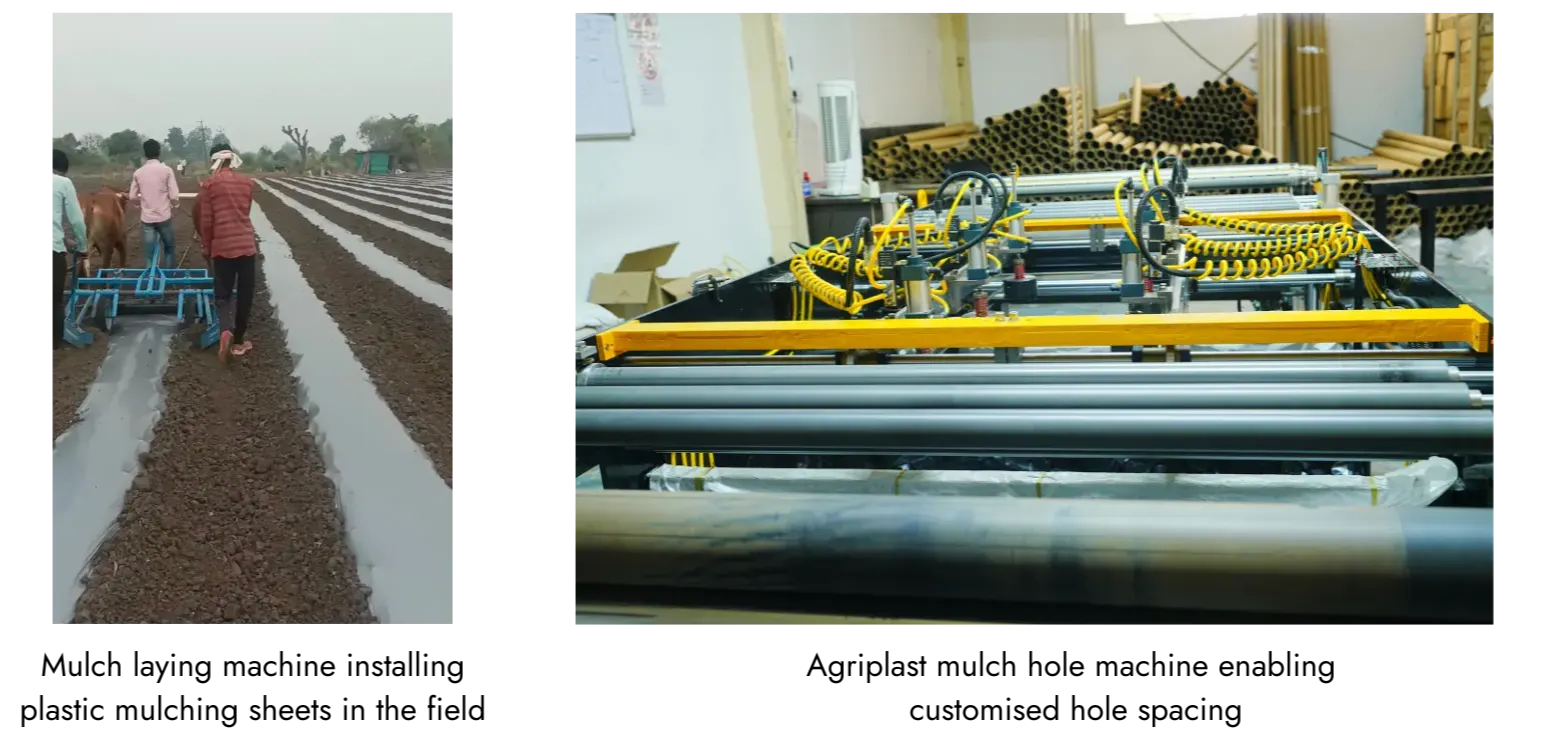
Mulch laying machine for field installation and Agriplast mulch hole machine for customised mulching sheets
Mulching Paper Price – What Affects Cost?
Mulching sheet price varies depending on the material and brand. Plastic mulches are often more expensive upfront but last longer, while organic mulches may require more frequent replacement but offer added soil health benefits. Compare mulching sheet price and mulching paper price by thickness, UV resistance, and roll length to match your budget and project scale.
Agriplast Mulching Paper is made from 100% virgin material for highest quality and life of the product.
Frequently Asked Questions (FAQs)
- 25–30 microns: One crop cycle
- 50 microns: One full vegetable cycle
- 100 microns: Multiple seasons in orchards with proper handling
Blog written and Posted by
Agriplast Tech India Editorial Team
Author bio will be updated soon.
You can write your view/comments here
Need Expert Assistance?
Get personalized recommendations for your greenhouse, polyhouse, or irrigation needs.
-
Bengaluru (Corporate Office)
- 918141446666
- support@agriplast.co.in
WeWork Roshni Tech Hub - 1st floor, PFS Club House, Marathahalli Main Rd, R.J.Gardens, Lakshminarayana Pura, EPIP Zone, Chinnapanna Halli, Bengaluru, Karnataka 560037