How Apple Farming in Himachal Pradesh Helped Yadav Singh Turn ₹8 Lakh into ₹25 Lakh
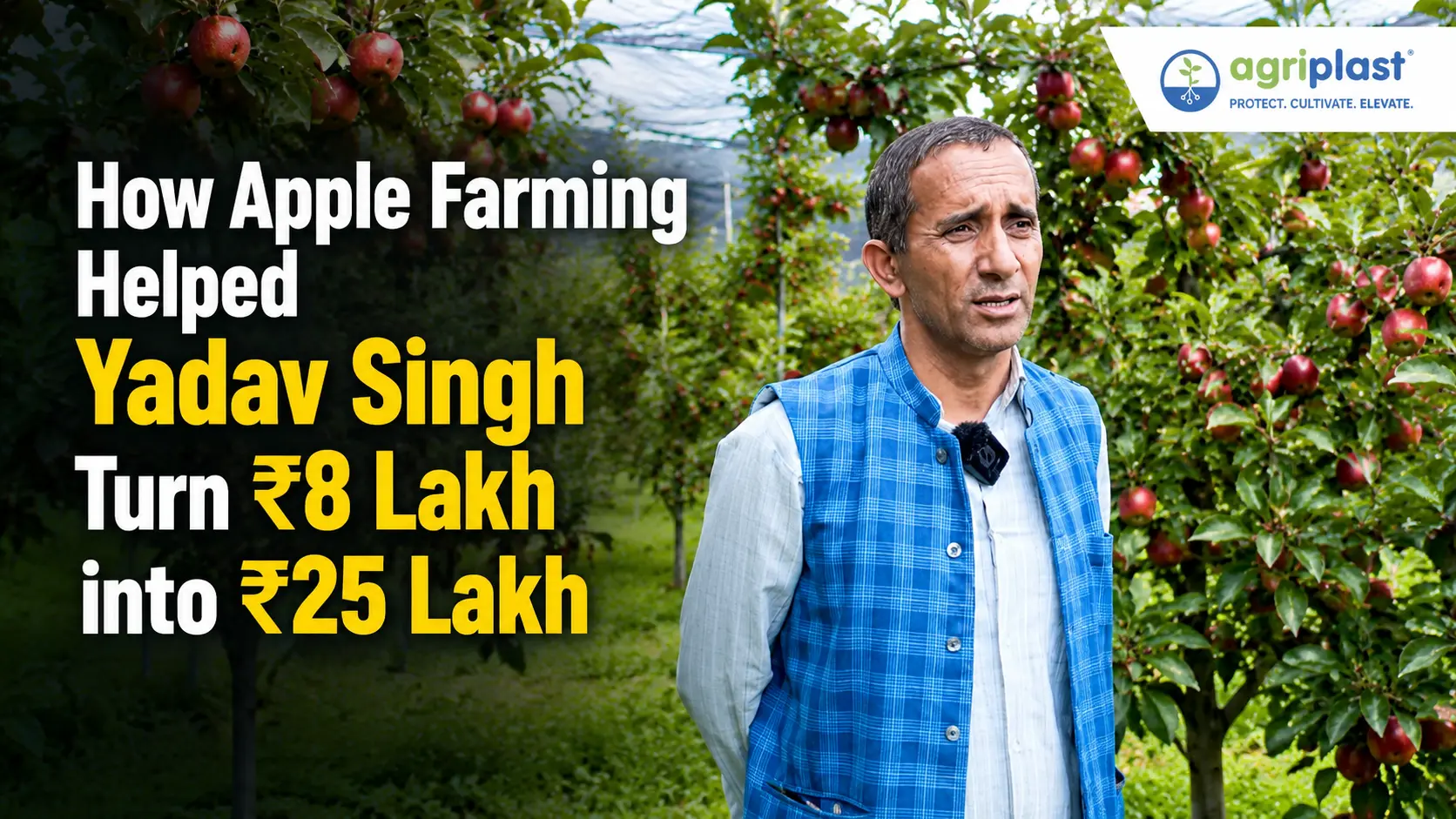
Before 2014, Yadav Singh’s 20-bigha apple orchard in Mandi earned around ₹8 lakh a year. Today, in a good apple season, the same land generates ₹15–25 lakh. One decision changed the orchard’s future forever — installing an anti-hail net.
Apple farming in Himachal Pradesh is the main source of income for thousands of families living in the hill districts. In Bakhiya village of Mandi, Yadav Singh faced the same challenge that troubles most apple growers in the region — hailstorms.
One sudden storm during the season could damage fruit quality, reduce Class A grading, and cut market prices almost in half.
Apple Farming in Himachal Pradesh: Why Hail Made the Math Brutal
Mandi sits in the lower-altitude apple belt. The terrain is steep, weather turns fast, and hailstorms during peak fruit-setting arrive every season — not once a decade. A single bad afternoon in May or June can rewrite the whole year's income statement.
The damage runs deeper than what falls off the tree. When a hailstone strikes an apple, the skin tears or pits — and that small injury becomes an entry point for fungal infection. Within days, a minor dent can turn into rot. The fruit that doesn't rot still grades down.
"Because we're in a hilly area, hail falls more often here. And when hail falls, apples get spoiled. In the market, hail-marked apples sell for half the price. Nobody wants their hard work to go waste like that."
For most growers, there's no real defence against this. Apples are already the highest-value crop on the land, with no second crop to fall back on if the hail comes. ₹8 lakh from 20 bigha was the ceiling Yadav Singh had learned to accept.
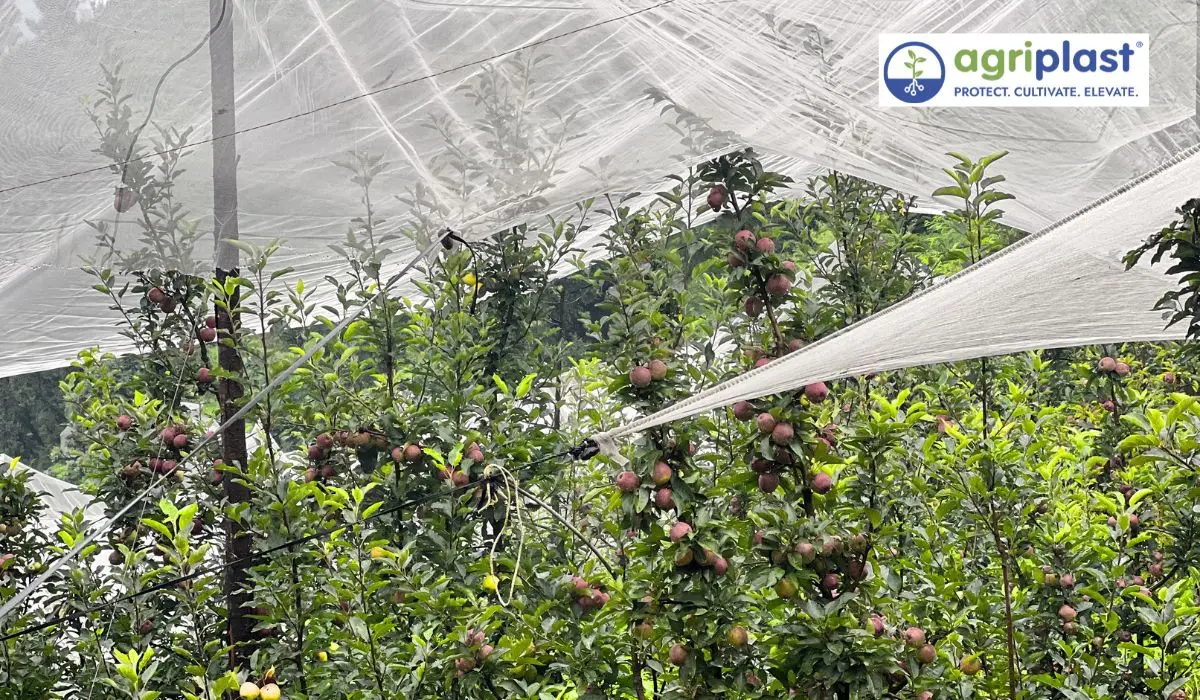
An apple orchard in the Himachal belt under the same kind of net covering Yadav Singh's trees since 2014.
The Switch: Being the First in His Belt to Try a Net
Anti-hail nets weren't part of the orchard landscape in Mandi before 2014. The technology existed, but no farmer in his belt had installed one. Yadav Singh was among the first to try.
He installed the Agriplast Ginegar anti-hail net in 2014. In the years that followed, he went through multiple lower-cost alternatives, testing whether cheaper options could perform the same way. According to him, they never did.
"Before 2014, none of these nets were here. We started installing the Agriplast Ginegar net. We tried other nets too in between — but those tear the apples themselves. With Ginegar, when you pull it, it comes down like elastic and goes back up like elastic."— Yadav Singh
The Result: A Permanent Shift in the Income Ceiling
Eleven years on, the numbers have stayed honest.
| Metric | Before 2014 | After 2014 |
|---|---|---|
| Annual income from 20 bigha | ₹8 lakh | ₹15–25 lakh (full crop year) |
| Income uplift | — | ~50%+ |
| Net installation cost | — | ~20% of annual income gain |
| Net lifespan so far | — | 11+ years, still in service |
| Class A apple share | Reduced by hail damage | Protected from hail strikes |
"Before 2014, our 20 bigha earned just ₹8 lakh. Now we earn between ₹15 lakh and ₹25 lakh when the apple crop is full. Our income went up by 50%. And the installation cost is only 20% of what we earn."
The income jump is what people notice first. The durability is what most growers underestimate — the same fabric stretched over the orchard in 2014 is still on the trees today.
Quieter gains followed too: less dust on the foliage, fewer spray rounds, and apple skin that holds its colour through the season.
Actual revenue results vary by region, variety, product quality, growing skills, and market channel.
🎥 Watch: How Yadav Singh's Apple Income Tripled in Mandi, Himachal Pradesh
Hear directly from Yadav Singh, an apple farmer from Bakhiya village, Mandi district, as he walks through his 11-year journey — from ₹8 lakh to ₹15–25 lakh on the same 20 bigha — and explains why he tried cheaper alternatives and went back.
Why the Weave Quality Matters as Much as the Hail Protection
Yadav Singh's most useful observation isn't about hail — it's about what the wrong net does to the tree underneath.
When he tested cheaper alternatives, the apples began showing problems unrelated to weather. Colour development went off, mite and woolly aphid pressure rose, and the canopy felt warmer and damper than it should.
Hail was being blocked, but something else was going wrong. He traced it back to the weave.
"The Agriplast Ginegar weave is thinner — sunlight reaches the plant properly, airflow stays good. The desi net is very dense. Under that net, dampness builds up, colour problems start on the apples, and diseases come in — mites, woolly aphid."
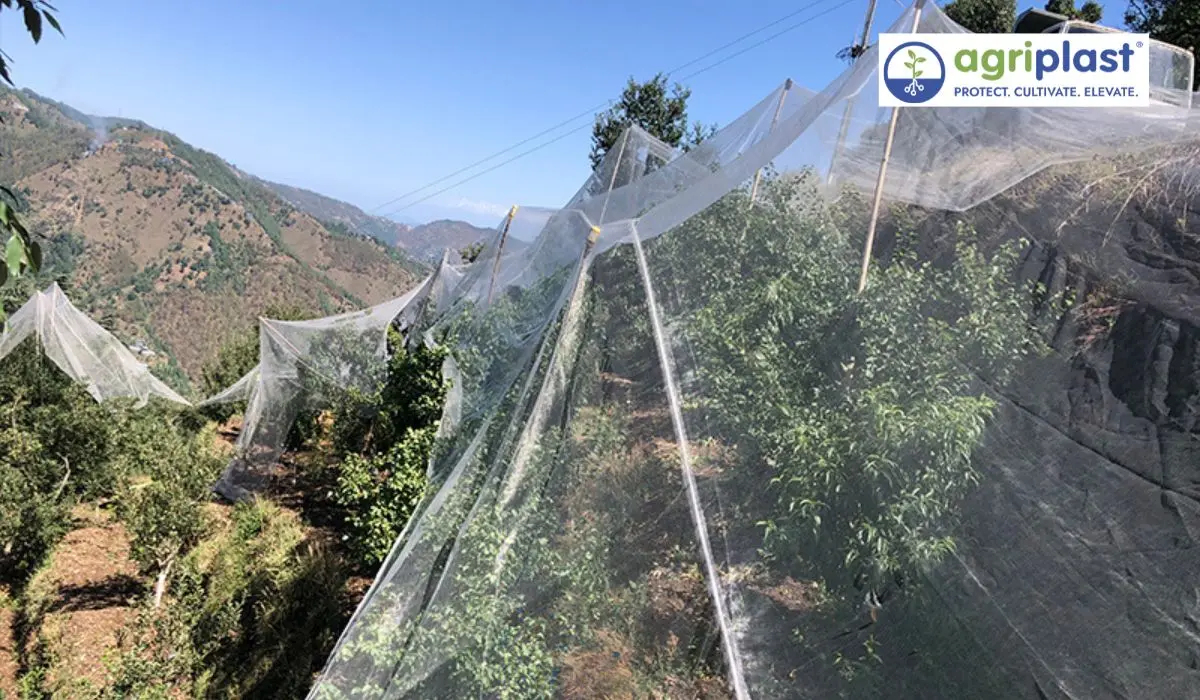
The thin, transparent weave is what allows sunlight and airflow through — the difference between protecting the crop and suffocating it.
The logic is straightforward. A hail net protects by absorbing impact, but it also changes the microclimate underneath.
A dense weave traps humidity and restricts airflow — the same conditions that let fungal infection and pests thrive. A thin, transparent weave does the protective job without suffocating the orchard.
For apple — where red colour development depends on sunlight in the final ripening weeks — this trade-off matters as much as hail protection itself.
The full guide to anti-hail nets for apple orchards covers shade percentage and seasonal timing in depth.
Yadav Singh's Advice for Apple Growers
"My message to farmers is — pay attention to your plants, pay attention to farming. And the most important thing: install good quality nets. A net like this will last 20 years. Your savings will be much higher than the installation cost."
Three practical tips, drawn from 11 years of watching the net work on his own orchard:
- Don't optimise for the lowest price. The desi net saves money on day one and costs you the orchard's colour grade by season three.
- Install once, properly. Hill terrain makes re-installation expensive and risky. Get the structure and tension right the first time.
- Match the net to the crop. Apple needs light penetration and airflow. A net designed for general hail cover may not suit fruit colour development.
Pro Tip: For colour-critical apple varieties like Red Delicious, Royal Gala, and Fuji, the more transparent Ginegar Leno anti-hail net (9–15% shade) is engineered for orchards where every percentage point of sunlight affects market grade.
Read How Sachin Dake Earns ₹10 L/Acre with Mulching for Strawberry Farming in Ooty.
Is Anti-Hail Net Right for Your Apple Orchard?
An honest checklist — when this investment makes sense, and when it doesn't.
Worth considering if: your orchard sits in a known hailstorm corridor (Himachal apple zones, Kashmir valley, Uttarakhand mid-hills), you sell at scale where Class A grading shifts your realised price, and you can commit one-time capital with a 15–20 year horizon.
Probably not yet if: your orchard is in a low-hail micro-pocket, you're farming under 5 bigha for local sale, or the slope makes anchoring impossible. The real question is rarely "should I install" — it's "which net and which structure suits this orchard."
Frequently Asked Questions
Blog written and Posted by
Rani Singh
Rani Singh is a Content Executive at Agriplast Tech India, covering high-value farming, protected cultivation, and farmer success stories. She focuses on turning field experiences into practical, actionable content for Indian farmers and agri-entrepreneurs.You can write your view/comments here
Need Expert Assistance?
Get personalized recommendations for your greenhouse, polyhouse, or irrigation needs.
-
Bengaluru (Corporate Office)
- 918141446666
- support@agriplast.co.in
WeWork Roshni Tech Hub - 1st floor, PFS Club House, Marathahalli Main Rd, R.J.Gardens, Lakshminarayana Pura, EPIP Zone, Chinnapanna Halli, Bengaluru, Karnataka 560037