Plastic Mulching in Agriculture: Benefits & How It Works
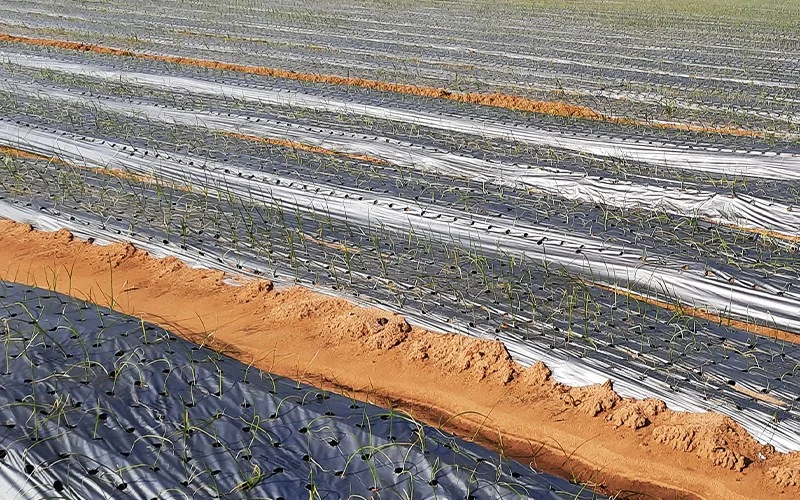
Plastic mulching in agriculture involves covering the soil surface with a specially engineered plastic film to create an ideal root-zone environment. This simple but powerful practice helps suppress weeds, regulate soil temperature, and conserve moisture, making it a core technology in modern horticulture.
When agricultural plastic mulch is combined with drip irrigation, the benefits multiply. Water is delivered directly to the root zone with minimal evaporation losses, fertilisers remain concentrated where plants need them most, and salt buildup on the soil surface is significantly reduced. The result is higher input efficiency, healthier root systems, and improved crop yields across vegetables, fruits, and commercial plantations.
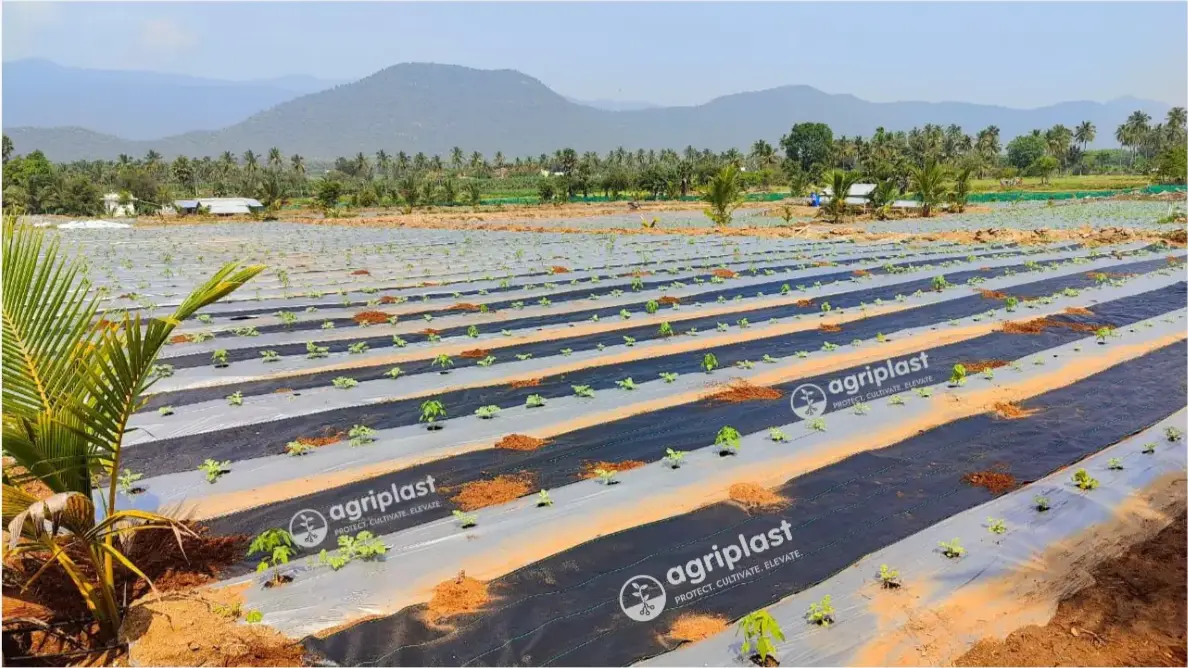
Plastic mulch film used in Indian vegetable farming with drip irrigation and ground cover to conserve moisture and suppress weeds
What is Plastic Mulch Farming?
Plastic mulch farming is an agricultural practice where a plastic mulch film typically made from polyethylene is laid over well-prepared soil beds, with pre-punched holes to allow crop growth. The mulch film acts as a protective barrier between the soil and the external environment, helping farmers better control growing conditions.
Unlike organic mulches such as straw or crop residues, agricultural plastic mulch does not decompose during the crop cycle. Instead, it creates a stable and controlled microclimate by reducing moisture loss, suppressing weeds, and regulating soil temperature. This makes plastic mulching in agriculture especially effective for vegetables, fruits, and commercial horticulture crops.
Read More: How Shashwat Mundra Avoided ₹2 Lakh Per Acre Losses in Amravati
High-quality plastic mulch films are engineered for specific crop durations. Thin mulch film rolls are typically used for short-duration vegetable crops (3–4 months), while thicker agricultural mulch film rolls are designed to last multiple seasons in orchards and perennial plantations. When sourced from reliable mulch film manufacturers, these films remain intact throughout the crop cycle, ensuring consistent performance and yield protection.
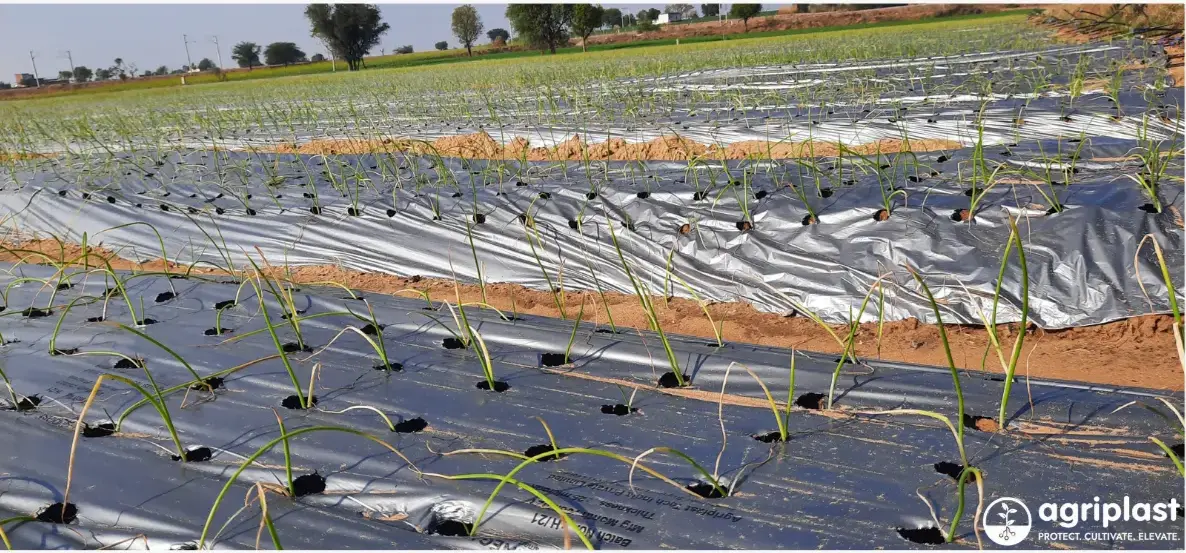
Agricultural plastic mulch film laid on soil beds with pre-punched holes for crop growth
The Top 4 Benefits of Mulching for Modern Farmers
1. Water Conservation (Evaporation Control)
In open-field farming, a significant portion of irrigation water is lost through surface evaporation before it reaches plant roots. Plastic mulch film acts as an impermeable barrier, sealing moisture within the root zone. This allows farmers to reduce irrigation frequency, improve water-use efficiency, and sustain crops in water-scarce regions.
2. Weed Management: The "Zero Light" Rule
Effective weed control depends on the opacity of the mulch film. High-quality plastic mulch films are engineered for zero light transmission, preventing sunlight from reaching the soil. Without light, weed seeds cannot photosynthesize or germinate, eliminating weed pressure without herbicides.
3. Soil Structure & Root Health
Plastic mulching protects the soil surface from erosion, compaction, and crusting caused by heavy rainfall. By maintaining a loose, aerated soil structure, it promotes strong white root development near the surface — the most nutrient-rich zone. Healthy white roots enhance water and nutrient uptake, forming the foundation of vigorous plant growth.
4. Improved Yield and Output
Plastic mulching directly improves crop yield by creating consistent growing conditions throughout the field. With stable soil moisture, controlled root-zone temperature, and zero competition from weeds, plants experience less stress and utilise water and nutrients more efficiently. This leads to uniform plant growth, earlier maturity, and higher marketable yields, especially in drip-irrigated systems.
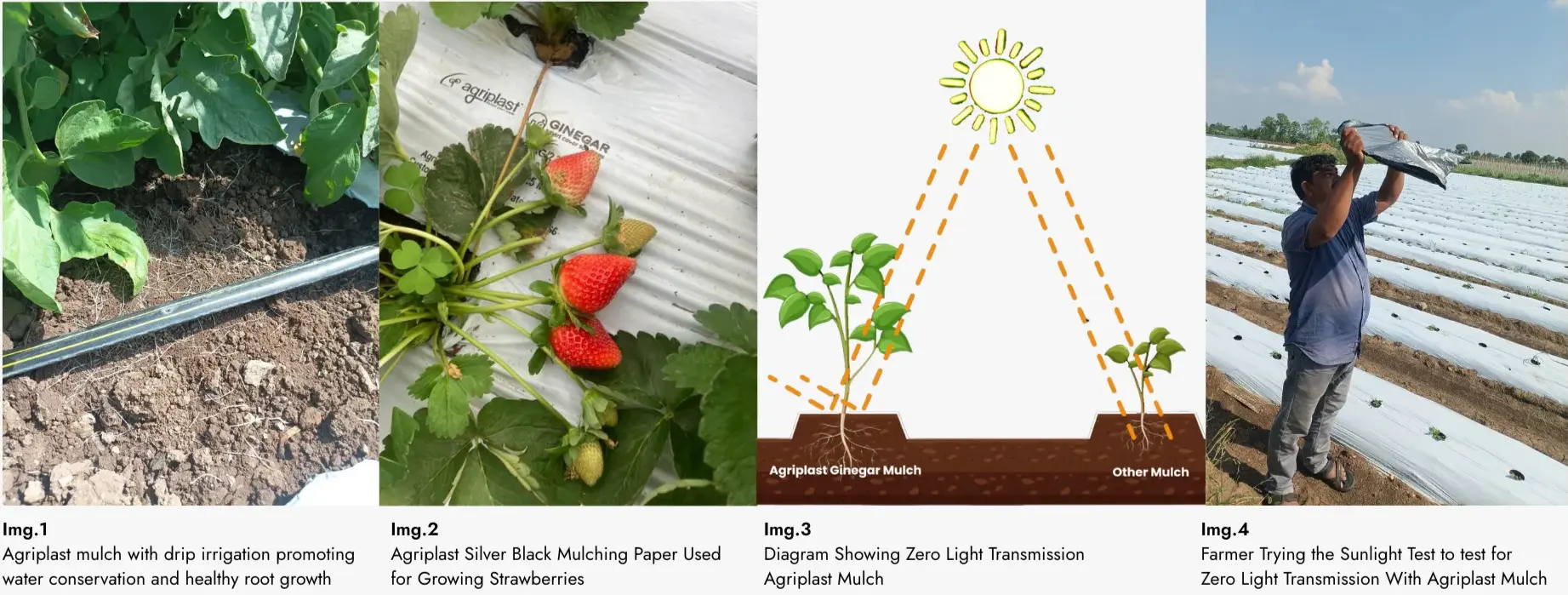
Key benefits of Agriplast mulch film — stronger white root development, improved fruit colour, and zero light transmission for complete weed suppression
The Synergy of Mulching with Drip Irrigation
Plastic mulching delivers maximum results when combined with drip irrigation installed beneath the mulch film. Together, they create a controlled root-zone environment while addressing a critical challenge in agriculture: soil salinity buildup.
In open fields, surface evaporation draws dissolved salts upward, concentrating them near the root zone and increasing stress on the plant. When drip irrigation operates under plastic mulch, evaporation is minimised and water spreads laterally through the soil profile. As moisture moves outward, salts are pushed toward the edges of the raised bed — away from active roots.
This results in a low-salinity, moisture-stable root zone, allowing plants to absorb water and nutrients more efficiently, reduce physiological stress, and maintain consistent growth throughout the crop cycle.
To understand how to choose the right agricultural mulching paper for your crop and farming conditions, read our detailed guide on selecting the right mulching paper.
Frequently Asked Questions (FAQ)
Vegetables like tomato, chilli, cucumber, watermelon, capsicum, strawberry, and many orchard crops benefit most from plastic mulching.
Plastic mulch reduces soil evaporation, allowing irrigation water to remain in the root zone. When combined with drip irrigation, water-use efficiency improves significantly.
Yes. High-quality plastic mulch blocks sunlight completely, preventing weed seeds from germinating and eliminating weed growth without herbicides.
Mulch thickness depends on crop duration: 25–30 microns for short crops, 50 microns for vegetables, and 100 microns or more for orchards.
Drip irrigation under plastic mulch reduces evaporation, improves fertiliser efficiency, and pushes salts away from roots, lowering soil salinity stress.
Thin mulch films are usually single-use, while thicker films used in orchards may last multiple seasons if carefully handled.
Use a torch test by shining light behind the film in a dark room. If light passes through, the mulch has poor opacity.
Yes. Plastic mulching is widely used in India to conserve water, manage heat, suppress weeds, and improve crop uniformity.
Blog written and Posted by
Abhinav Roy
Abhinav Roy is an agribusiness professional, agricultural communicator, and host of AgriTalk by Abhinav Roy. He works closely with farmers, agripreneurs, across India to simplify complex agricultural technologies into practical, field-ready insights. With hands-on exposure to protected cultivation, crop protection systems, and farm economics, Abhinav focuses on bridging the gap between science, sustainability, and scalable farming solutions.You can write your view/comments here
Need Expert Assistance?
Get personalized recommendations for your greenhouse, polyhouse, or irrigation needs.
-
Bengaluru (Corporate Office)
- 918141446666
- support@agriplast.co.in
WeWork Roshni Tech Hub - 1st floor, PFS Club House, Marathahalli Main Rd, R.J.Gardens, Lakshminarayana Pura, EPIP Zone, Chinnapanna Halli, Bengaluru, Karnataka 560037