Greenhouse Film Complete Guide: Types, Benefits and Uses
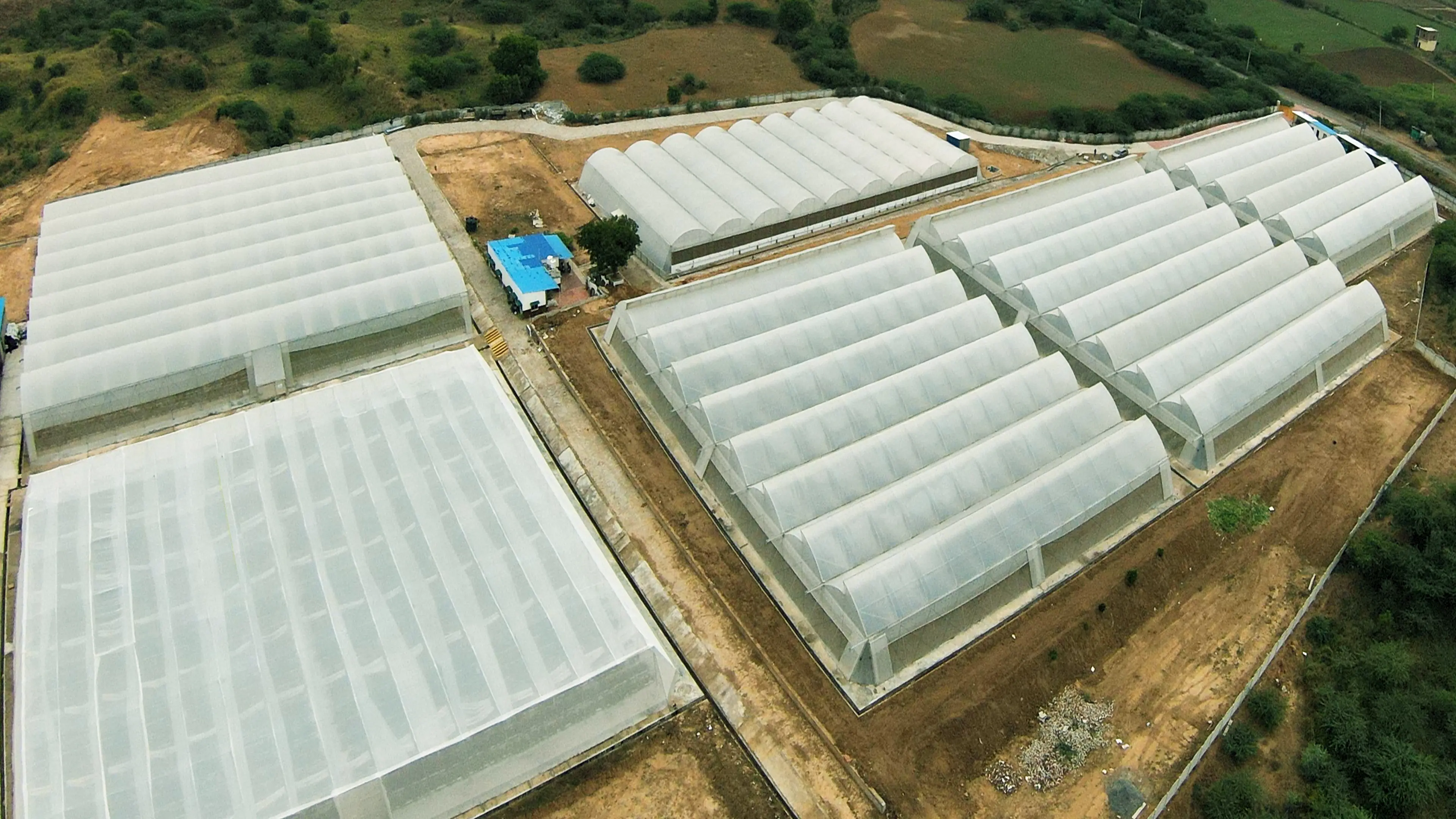
Greenhouse cultivation is transforming Indian agriculture by enabling farmers to grow high-value crops year-round, regardless of external climate challenges. But one component impacts greenhouse performance more than almost anything else — the greenhouse film.
Also known as greenhouse plastic, polyethylene greenhouse film, or UV-stabilized greenhouse film, this protective covering influences crop yield, temperature regulation, light quality, disease pressure, and overall profitability. Selecting the wrong film can limit your production potential, while the right film can dramatically boost yields and plant health.
This comprehensive guide explains everything farmers and agripreneurs need to know about greenhouse films — how they work, different types, technical features, lifespan, advantages, common mistakes, installation tips, and how to choose the best film for your crop and region. All examples reference Agriplast Greenhouse Film, India’s premium and longest-lasting covering solution engineered for harsh climatic conditions.
The Greenhouse Structure vs. the Greenhouse Film
It’s a common misconception that the greenhouse structure is the most important component of protected cultivation. In reality, the structure simply acts as a skeleton that holds the greenhouse film in place.
The real environmental control — light quality, light quantity, temperature regulation, humidity behaviour, and crop protection — comes directly from the polyethylene greenhouse film.
Because plants depend entirely on light for photosynthesis, selecting the right film becomes a critical decision. The film determines:
- Light quality: The spectrum reaching the crop
- Light quantity: Light diffusion and transmission
- Temperature behaviour: How heat is retained or released
- Condensation control: Whether droplets form on the crop
- Durability and lifespan: UV stability and mechanical strength
A poor-quality film compromises light, reduces yield, increases disease pressure, and tears early — costing more in the long run. A premium film ensures consistent performance throughout its lifetime.
What Is Greenhouse Film and How Does It Work?
A greenhouse film is a specialized polyethylene sheet designed to cover greenhouse structures and create a controlled environment for plants. Unlike ordinary plastic sheets, greenhouse films are scientifically formulated to:
- Allow optimum light transmission and diffusion
- Diffuse sunlight to reduce leaf burn
- Protect plants from UV rays
- Maintain temperature and humidity
- Reduce heat loss during cold nights
- Prevent dust, condensation, and fungal diseases
- Withstand wind, rain, and degradation
Agriplast greenhouse films use 5-layer manufacturing technology, where each layer performs a specific function — anti-dust, tensile strength, IR/thermic retention, anti-drip, and UV stabilization. This ensures maximum durability and long-term performance.
Main Types of Greenhouse Films
Agriplast offers multiple film types designed for different climatic conditions, crop types, and greenhouse systems. The technical chart below highlights key characteristics such as light transmission, diffusion, anti-drip, sulphur resistance, and more.
Agriplast Greenhouse Films — Technical Comparison Table
Film Characteristics
| Film Type | Light Transmission | Light Diffusion | Anti-Dust | UV Blocking | Anti-Sulphur | Anti-Drip |
|---|---|---|---|---|---|---|
| Drip Lock Diffused AV Blue | 77% | 60% | ✔ | ✔ | ✔ | ✔ |
| 205 N | 88% | 60% | ✔ | ✔ | ✔ | ✘ |
| Drip Lock Clear | 90% | 25% | ✔ | ✔ | ✘ | ✔ |
| Drip Lock Cool | 87% | 77% | ✔ | ✔ | ✔ | ✔ |
| Drip Lock Diffused | 87% | 62% | ✔ | ✔ | ✔ | ✘ |
Recommended Areas and Crops
| Film Type | Recommended Areas | Recommended Crops |
|---|---|---|
| Drip Lock Diffused AV Blue | Across India | Tomato, bell pepper, cucumber, strawberry, roses, lettuce, broccoli, chrysanthemum |
| 205 N | Across India | All crops including roses (except bicolor roses) |
| Drip Lock Clear | Cold areas (limited sunlight) | Floriculture, horticulture, nursery (except roses) |
| Drip Lock Cool | Hot areas (reduces temperature) | All floriculture and horticulture crops except single colour roses |
| Drip Lock Diffused | Across India | All crops (except roses) |
Key Features in Modern Greenhouse Films
High-quality greenhouse films today are scientific materials, not just sheets of plastic. Agriplast Greenhouse Film incorporates advanced features to deliver maximum life and crop performance.
5-Layer Manufacturing Technology
Each layer is engineered for:
- Anti-dust performance
- High tensile strength
- Infrared/thermic retention
- Anti-drip and anti-mist
- UV stability
UV-Stabilized for Longer Life
Agriplast films are protected against UV degradation with:
- 3-year UV warranty
- Recommended life of 5 years
200 Micron Standard Thickness
Ensures maximum tear resistance and long-term durability.
Multiple Width Options
Available in 4.5m, 5.5m, 7m, 9m, and 11m with customizable lengths.
Special Additives
- Anti-dust: Prevents dust build-up on the outer surface
- Anti-drip / Anti-mist: Guides moisture sideways, preventing droplets
- Thermic/IR blocking: Retains heat during cold nights
- Anti-sulphur: Protects against sulphur-based fungicide damage
These features combine to create a film that maintains clarity, prevents water droplet formation, protects from chemicals, and supports higher yields.
Understanding the Properties in Depth
Some properties are non-negotiable, while others are optional but highly valuable depending on crop and climate.
1. Anti-Dust (Compulsory)
An anti-dust layer on the outer surface ensures dust does not settle easily.
Dust accumulation significantly reduces the amount of light entering the greenhouse. Even a small reduction in light can decrease photosynthesis, weaken plant growth, and reduce yield. Anti-dust films help maintain transparency and protect the light environment throughout the season.
2. UV Resistance / UV Stabilization (Compulsory)
UV stabilization is essential for the film’s durability. A UV-stabilized greenhouse film:
- Does not become brittle under harsh sunlight
- Retains mechanical strength
- Maintains optical properties (light transmission and diffusion)
- Prevents early cracking or tearing
- Lasts its intended lifespan
Agriplast films come with a 3-year UV warranty and a recommended life of 5 years, offering maximum protection for Indian conditions.
3. Light Transmission and Diffusion (Compulsory)
Light transmission determines how much usable sunlight enters the greenhouse. Light diffusion spreads light evenly across the canopy.
A well-balanced film prevents hotspots, reduces leaf burn, and ensures uniform growth — especially critical for vegetables, flowers, and nursery crops.
Agriplast Ginegar films offer scientifically engineered transmission (up to 90%) and diffusion (up to 77%) for superior crop performance.
Optional but Highly Valuable Additives
4. Anti-Sulphur
Sulphur-based fungicides can damage films over time. Anti-sulphur films are engineered to resist this degradation — essential for rose growers and high-disease-pressure environments.
5. Anti-Drip / Anti-Mist Layer
Condensation droplets on the inner surface of a greenhouse film can:
- Fall directly onto leaves
- Spread fungal infections
- Reduce light penetration
- Damage delicate flowers like roses and gerberas
An anti-drip layer guides moisture sideways, preventing droplet formation. This keeps crops healthier and protects sensitive plants.
6. IR/Thermic Layer
Also known as the infrared retention layer, this special additive traps heat during cold nights, preventing dramatic temperature drops.
Agriplast Ginegar’s IR Cooling Film offers advanced temperature management by balancing day-night heat behaviour. Benefits include:
- Reduced cold stress
- Better winter crop performance
- Controlled humidity
- Less condensation formation
7. High Tensile-Strength Layer
Mechanical durability is key for long-term performance. A high-tensile layer improves resistance to:
- Wind
- Handling during installation
- Snow load (in colder regions)
- Structural pressure
This ensures the greenhouse film remains intact and functional throughout its life.
Thickness Guide – Which Micron Is Right for You?
Greenhouse films generally range from 120 to 200 microns, but for Indian conditions, 200 microns is the gold standard, offering:
- Higher tear resistance
- Better UV endurance
- Strong mechanical properties
- Increased lifespan
- Enhanced wind resistance
Advantages of Using High-Quality Greenhouse Film
Switching to a premium polyethylene greenhouse film offers multiple benefits:
1. Enhanced Light Management
- Correct transmission supports strong photosynthesis
- Diffusion reduces hotspots and enhances uniform growth
2. Better Temperature Regulation
Thermic films keep structures warmer at night and cooler during peak heat.
3. Crop Protection Against Weather Extremes
Reliable shielding from wind, dust, hail, and rain.
4. Improved Pest and Disease Management
Anti-drip additives reduce fungal infections.
5. Higher Yield and Profitability
Better growing conditions lead to healthier plants and higher-quality produce.
6. Lower Maintenance Costs
High-quality films reduce the frequency of replacement, saving long-term costs.
7. Designed for Indian Conditions
Agriplast films are engineered to withstand India’s UV intensity and climate variations.
Disadvantages and Common Mistakes
Greenhouse films only underperform when farmers make the following mistakes:
Common Mistakes
- Choosing cheap, non-UV stabilized plastic
- Buying low-quality unbranded films
- Not matching film type to climate
- Allowing sagging or loose installation
- Using sulphur sprays on non-sulphur-resistant films
- Incorrect tensioning, leading to premature tearing
Possible Disadvantages (With Low-Grade Films Only)
- Early brittleness
- Milky film colour due to UV breakdown
- Fogging and condensation
- Reduced light penetration
Premium greenhouse films like Agriplast avoid these issues entirely.
Lifespan of Greenhouse Films – What to Expect
Agriplast films come with:
- 3-year UV warranty
- Expected life of 5+ years (recommended replacement at 5 years)
Film longevity depends on:
- UV exposure
- Chemical use (sulphur sensitivity)
- Structure stability
- Installation quality
- Climate intensity
Proper care significantly increases lifespan.
How to Choose the Right Greenhouse Film
When selecting a greenhouse film, consider:
1. Climate
- Cold regions: Drip Lock Clear
- Hot regions: Drip Lock Cool
- General climates: 205 N, Diffused films
2. Crop Type
- Roses: 205 N
- Floriculture: Drip Lock Cool / Clear
- Vegetables: Diffused AV Blue or Diffused
3. Light Requirements
- Need more sunlight? Clear
- Want better canopy penetration? Diffused
4. Additives
Choose films with:
- Anti-drip (for humid regions)
- Anti-dust
- Anti-sulphur
5. Durability and Warranty
Select a film with a long warranty and proven performance under Indian conditions.
Installation and Maintenance Tips
Proper installation can extend film life by up to 12 months. Follow these tips:
- Stretch the film tightly during installation
- Avoid sharp edges on structure pipes
- Use proper locking channels and profiles
- Clean accumulated dust periodically
- Avoid spraying sulphur directly on the film
- Replace old or brittle clips immediately
A well-maintained film performs significantly better long-term.
Conclusion
Choosing the right greenhouse film is one of the most important decisions in protected cultivation. A premium UV-stabilized, 200-micron polyethylene film — like Agriplast’s — ensures better yields, longer lifespan, and optimal greenhouse performance.
With 5-layer technology, 3-year UV warranty, and recommended life of 5 years, Agriplast greenhouse films remain one of the most trusted choices among progressive Indian farmers.
A new line of advanced greenhouse films will be launching soon, bringing even more innovation to India’s protected cultivation industry.
Not sure which film fits your crop and region? Contact Agriplast’s Agronomy Team for a Free Consultation.
Frequently Asked Questions (FAQs)
Blog written and Posted by
Abhinav Roy
Abhinav Roy is an agribusiness professional, agricultural communicator, and host of AgriTalk by Abhinav Roy. He works closely with farmers, agripreneurs, across India to simplify complex agricultural technologies into practical, field-ready insights. With hands-on exposure to protected cultivation, crop protection systems, and farm economics, Abhinav focuses on bridging the gap between science, sustainability, and scalable farming solutions.You can write your view/comments here
Need Expert Assistance?
Get personalized recommendations for your greenhouse, polyhouse, or irrigation needs.
-
Bengaluru (Corporate Office)
- 918141446666
- support@agriplast.co.in
WeWork Roshni Tech Hub - 1st floor, PFS Club House, Marathahalli Main Rd, R.J.Gardens, Lakshminarayana Pura, EPIP Zone, Chinnapanna Halli, Bengaluru, Karnataka 560037